




What's Happening?
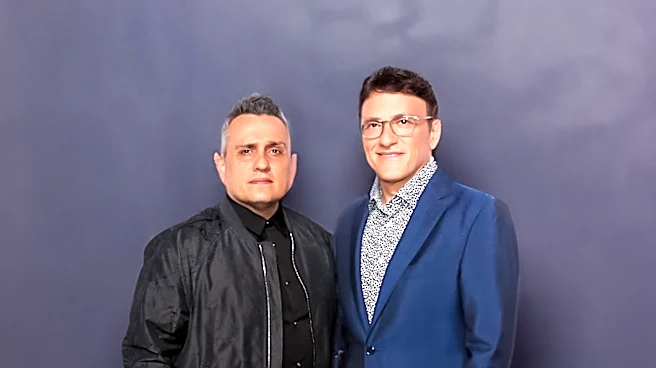
Director Joe Russo has disclosed the origin of the central idea for the upcoming Marvel film, 'Avengers: Doomsday.' During an appearance at the Doha Film Festival, Russo explained that the film's concept emerged from a conversation with co-writer Stephen
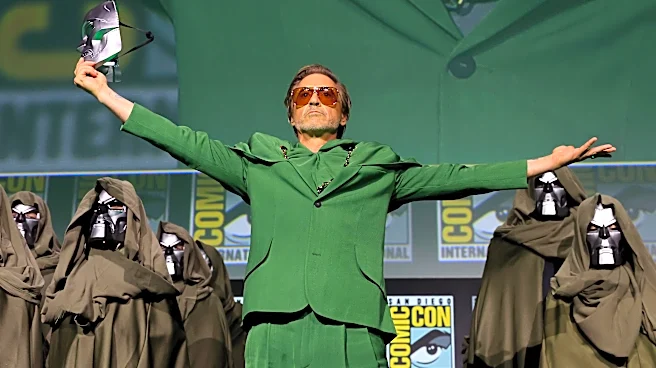
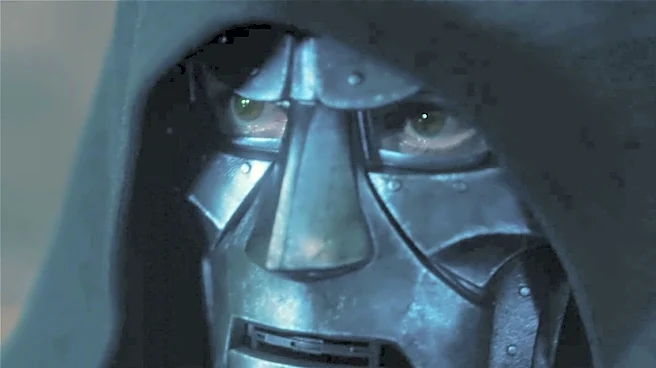
McFeely. McFeely proposed an unconventional idea: what if the cameras had continued rolling immediately after the conclusion of 'Avengers: Endgame,' revealing the very next scene? Russo initially recognized the inherent risks of revisiting a story that had achieved such significant success, acknowledging that it could potentially impact the audience's emotional investment in the previous film. However, he ultimately found himself drawn to the creative possibilities presented by the idea. The core premise explored the notion of happiness being finite and the potential for one character's happiness to necessitate taking it from another. This intriguing concept became the foundation for 'Avengers: Doomsday,' which is set to introduce Robert Downey Jr. as the new supervillain, Doctor Doom, and bring back some original Avengers characters. The film is scheduled for release in India on December 17, 2026, one day before its U.S. release.
Why It's Important?
The revelation of 'Avengers: Doomsday's' plot genesis is significant for several reasons within the entertainment industry and for Marvel fans. It indicates a bold narrative direction for the Marvel Cinematic Universe (MCU), as it directly challenges and potentially recontextualizes the emotional resolution of 'Avengers: Endgame,' a film that marked a major turning point for the franchise. This approach could either reinvigorate fan interest by offering a fresh perspective on beloved characters and their fates or risk alienating a segment of the audience deeply attached to the previous film's ending. The decision to explore themes of finite happiness and the cost of personal joy suggests a more complex and potentially darker narrative tone for the MCU, moving beyond traditional superhero tropes. Furthermore, the introduction of Robert Downey Jr. as Doctor Doom is a major casting decision that could redefine the villain landscape of the MCU, offering a familiar face in a new, antagonistic role. This creative choice could attract a wider audience and generate considerable buzz, impacting box office performance and future franchise developments.
What's Next?
Following Joe Russo's revelation, anticipation for 'Avengers: Doomsday' is likely to intensify, particularly regarding how the film will build upon and potentially alter the legacy of 'Avengers: Endgame.' Fans will be eager for further details on the plot, character arcs, and how the concept of 'finite happiness' will be explored within the superhero genre. The upcoming release of trailers and promotional materials will be crucial in shaping public perception and managing expectations, especially given the sensitive nature of revisiting such a pivotal moment in MCU history. The film's release schedule, with India receiving it a day before the U.S., suggests a strategic global rollout, indicating Marvel's continued focus on international markets. The performance of 'Avengers: Doomsday' will undoubtedly influence future creative decisions within the MCU, particularly concerning the handling of established characters and the introduction of new narrative complexities. The reception of Robert Downey Jr. as Doctor Doom will also be a key factor in determining the character's future prominence in the franchise.
Beyond the Headlines
The creative approach to 'Avengers: Doomsday,' as described by Joe Russo, delves into deeper philosophical questions about the nature of happiness and consequence, which could have broader cultural implications beyond the superhero genre. By questioning the permanence of a 'happy ending' and exploring the idea that one's happiness might come at another's expense, the film could spark discussions about ethical dilemmas and the complexities of human experience, even within a fantastical setting. This narrative choice reflects a potential maturation of the superhero genre, moving beyond simplistic good-versus-evil narratives to explore more nuanced moral landscapes. The decision to bring back a beloved actor like Robert Downey Jr. in a villainous role also challenges audience expectations and could redefine how studios approach character development and actor utilization in long-running franchises. This could set a precedent for future cinematic universes to take bolder risks with established characters and narratives, pushing the boundaries of traditional storytelling in blockbuster films.