







What's Happening?
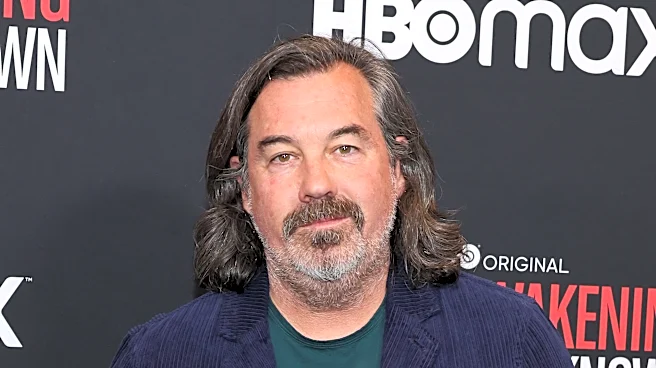
Duncan Sheik, the acclaimed singer-songwriter and composer, passed away on Thursday at the age of 56 due to cardiac arrest. Sheik was widely recognized for his 1990s hit song, 'Barely Breathing,' and his significant contributions to Broadway as the composer of the musical
'Spring Awakening,' for which he earned two Tony Awards. His career extended beyond a single hit, encompassing a diverse body of work that included albums blending folk, electronic, and orchestral sounds, as well as compositions for film. Sheik's impact on popular culture was also noted through the inclusion of 'Barely Breathing' in an episode of 'Girls' and a reference in 'The Sopranos,' highlighting his lasting presence in various artistic mediums. Despite the common perception of him as a 'one-hit wonder' due to the widespread popularity of 'Barely Breathing,' his subsequent achievements, particularly in theater, demonstrated a broader artistic range and sustained creative output.
Why It's Important?
Duncan Sheik's career trajectory is important as it challenges the conventional 'one-hit wonder' label often applied to artists with a single commercially dominant song. His success with 'Spring Awakening' on Broadway, earning him two Tony Awards, underscores the potential for artists to evolve and achieve significant recognition in different creative fields. This demonstrates that initial mainstream success does not necessarily define an artist's entire legacy or limit their artistic exploration. His ability to transition from a pop music sensation to a respected theatrical composer highlights the versatility and depth that can exist within the music industry. Furthermore, his expressed desire to create music without solely focusing on commercial prospects offers a valuable perspective on artistic freedom and integrity, influencing how artists might approach their careers beyond the pressures of chart performance. His work also contributed to the cultural landscape, with his music being featured in popular television shows, solidifying his place in the broader entertainment sphere.
What's Next?
While the immediate focus will be on remembrances and tributes to Duncan Sheik's life and work, his passing may prompt a renewed appreciation for his diverse artistic contributions. There could be increased interest in his lesser-known musical albums and a re-evaluation of his impact on both the pop music scene of the 1990s and the contemporary Broadway landscape. The legacy of 'Spring Awakening' is likely to continue, potentially leading to more productions or renewed interest in its themes and music. Discussions about the nature of 'one-hit wonders' and the broader careers of artists who achieve initial mainstream success may also resurface, using Sheik's journey as a case study. His influence on aspiring musicians and composers, particularly those looking to bridge different genres and artistic disciplines, will likely be highlighted in future analyses of his career.
Beyond the Headlines
Beyond the immediate news of his passing, Duncan Sheik's career offers a deeper insight into the complexities of artistic identity and public perception. The persistent labeling of artists as 'one-hit wonders,' even when they achieve substantial success in other areas, raises questions about how the music industry and media define and categorize creative output. Sheik's ability to navigate this perception by pursuing projects like 'Spring Awakening' demonstrates a commitment to artistic growth over commercial expectations. This highlights the ethical dimension of artistic freedom versus market demands. His work, particularly in musical theater, also contributed to the cultural dialogue by exploring complex themes, showcasing the power of music to convey profound narratives. His journey serves as a reminder that an artist's true legacy often extends far beyond their most commercially successful single, encompassing a broader spectrum of creative endeavors and cultural impact.