
What's Happening?
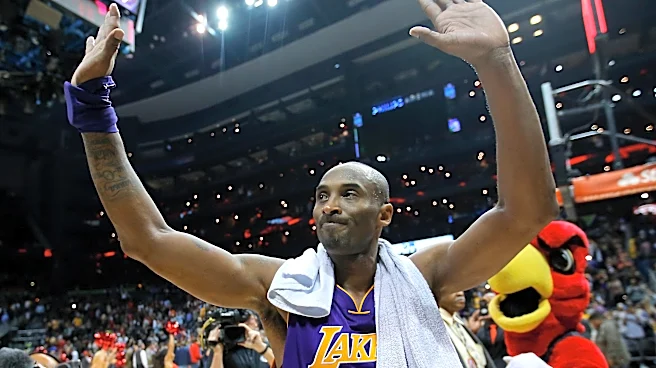
In 2020, the late NBA legend Kobe Bryant expressed a strong belief that several WNBA MVPs possessed the skills to compete in the NBA. Bryant specifically named Diana Taurasi, Maya Moore, and Elena Delle
Donne as players he thought could hold their own against male professional basketball players. This perspective contrasted with the common dismissal of such claims by some NBA players, notably after Brittney Griner's assertion that she could beat DeMarcus Cousins. Bryant emphasized that these WNBA stars had exceptional skill sets. He described Taurasi, the 2009 WNBA MVP, as having a game built on audacity and shot-making, with deep shooting range and impressive footwork. Delle Donne, a two-time MVP, was noted for her unusual combination of size and guard-like skills, allowing her to shoot over defenders and handle the ball effectively.
Why It's Important?
Kobe Bryant's endorsement of WNBA players' capabilities to compete in the NBA holds significant importance for several reasons. Firstly, it challenged prevailing gender biases within professional sports, coming from one of basketball's most respected figures. His statement validated the elite skill level present in the WNBA, potentially shifting perceptions among fans and fellow athletes. This recognition from a male superstar like Bryant could inspire greater respect and viewership for women's basketball, fostering a more inclusive environment in the broader sports landscape. Furthermore, it highlighted the individual talents of players like Taurasi, Moore, and Delle Donne, emphasizing that skill, rather than just physical attributes, is a critical determinant of basketball prowess, thereby elevating the discourse around athletic ability across genders.
What's Next?
While the direct implication of WNBA players competing in the NBA remains a hypothetical discussion, Kobe Bryant's comments continue to fuel conversations about skill parity and gender equality in basketball. The ongoing impact of his statement may encourage more cross-league recognition and collaboration, potentially leading to increased visibility and opportunities for WNBA players. Discussions about the unique skill sets of WNBA athletes, as highlighted by Bryant, could influence coaching philosophies and player development strategies in both men's and women's basketball. The broader conversation about whether female athletes could compete in male-dominated leagues will likely persist, driven by such influential endorsements, pushing for a more nuanced understanding of athletic talent and performance.
Beyond the Headlines
Kobe Bryant's remarks extend beyond a simple assessment of basketball talent; they touch upon deeper societal perceptions of gender roles and athletic capability. His willingness to publicly acknowledge the elite skills of WNBA players challenged traditional masculinity in sports, where male dominance is often assumed. This perspective fostered a more equitable view of athletic excellence, suggesting that talent transcends gender. Bryant's advocacy for women's basketball, including his mentorship of several female players, underscored his commitment to promoting the sport and empowering female athletes. His comments serve as a powerful reminder that true athletic greatness should be recognized irrespective of gender, contributing to a broader cultural shift towards greater inclusivity and respect in sports.