



What's Happening?
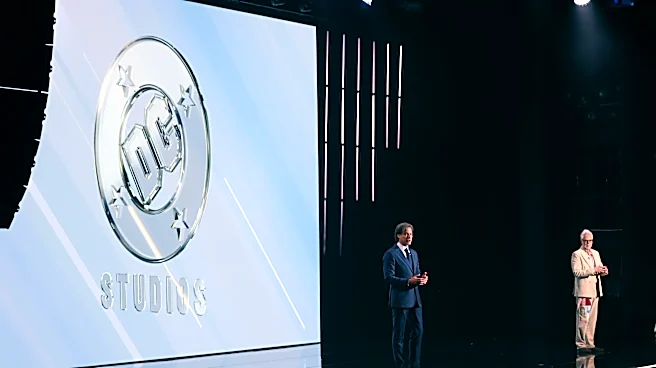
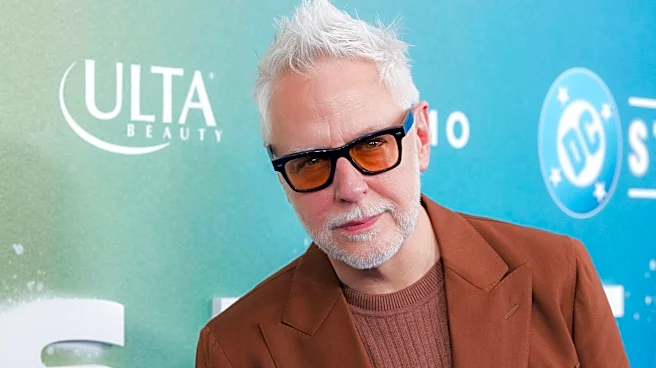
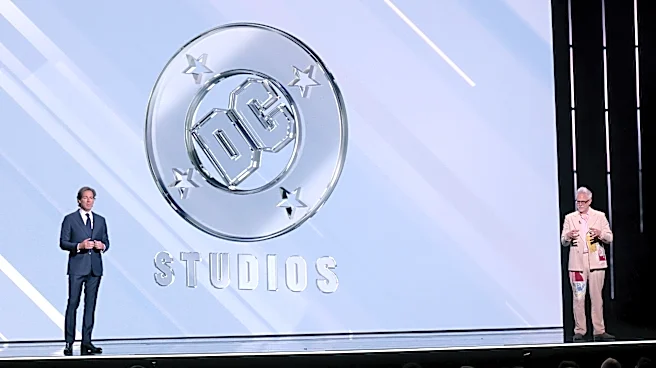
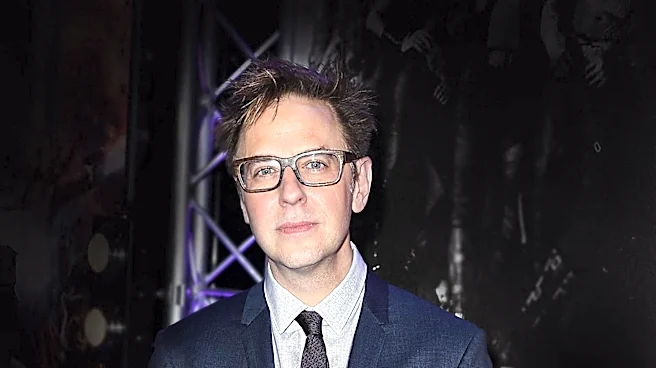
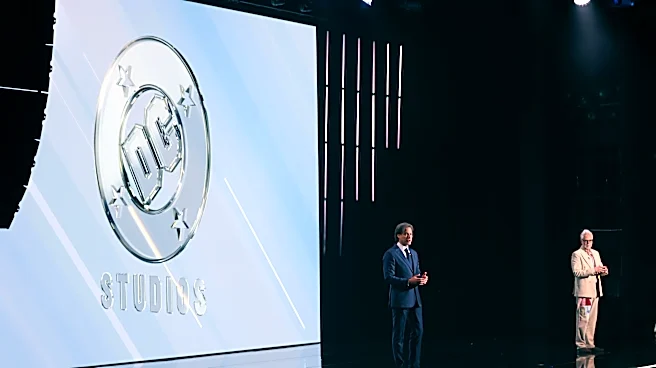
Skydance Media's takeover of Warner Bros. Discovery has resulted in the departure of James Gunn and Peter Safran from their co-CEO roles at DC Studios on November 9, 2026. This decision has caused concern among comic-book fans regarding the future direction
of the DC Cinematic Universe (DCU). While the exact reasons for the leadership change have not been publicly detailed by Skydance Media, reports suggest that DC's declining box-office performance in 2026 may have contributed to the decision. This comes despite 'Superman' (2025), a film under Gunn's leadership, being the best-performing comic-book film of 2025, grossing $618 million worldwide against a $225 million production budget. However, 'Supergirl' (2026), another DCU film, reportedly underperformed, which may have influenced Skydance's assessment.
Why It's Important?
This leadership shake-up at DC Studios following Skydance Media's acquisition of Warner Bros. Discovery carries significant implications for the entertainment industry, particularly for the future of the DCU. The departure of James Gunn, who had a distinct creative vision for the DCU, could lead to a shift in the cinematic approach to beloved comic-book characters. Fans and industry observers are concerned that this change might result in increased studio interference and a departure from the creative autonomy that Gunn and Safran had championed. The success or failure of future DCU projects under new leadership will be closely watched, as it could influence strategies for other major cinematic universes and intellectual properties within the competitive entertainment landscape. The decision also highlights the ongoing tension between creative vision and box-office performance in major film franchises.
What's Next?
The immediate future for the DCU involves the appointment of new leadership, with Jeremy Latcham expected to take over as DC Studios president and chief creative officer. The key question remains whether the new leadership will maintain any of the creative philosophies established by Gunn and Safran, particularly their commitment to director and writer autonomy. Fans are anxious to see if previously announced projects, such as the Amanda Waller series, the Booster Gold show, and the planned Batman film 'The Brave and the Bold,' will proceed as initially envisioned or if they will be re-evaluated or canceled. The performance of upcoming DCU films and television series under the new regime will be critical in determining the long-term trajectory of the franchise and its ability to compete with other major cinematic universes.
Beyond the Headlines
The restructuring at DC Studios raises broader questions about the balance between creative freedom and corporate control in large-scale entertainment franchises. The initial philosophy under Gunn and Safran emphasized creative autonomy, aiming for a diverse range of storytelling within the DCU, a stark contrast to the more uniform approach often seen in other cinematic universes. Skydance Media's decision to replace them, potentially due to box-office performance, suggests a prioritization of commercial success over a potentially more experimental creative direction. This development could signal a trend where major studios, especially after mergers and acquisitions, lean towards more commercially predictable content, potentially stifling innovative storytelling in favor of established formulas. The long-term cultural impact on how comic-book adaptations are produced and perceived by audiences will be a significant area to observe.