





What's Happening?
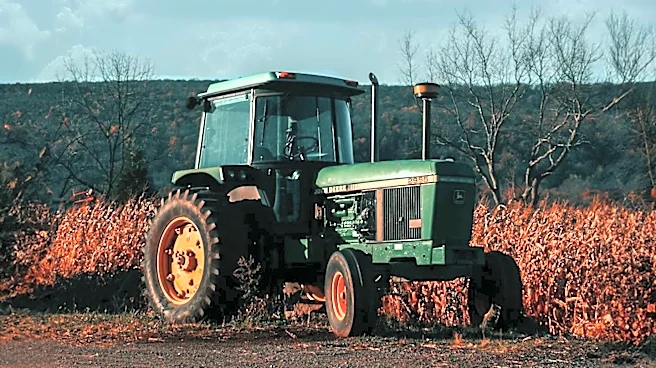
John Deere, the Moline-based company, has been recognized as one of Interbrand’s Best Global Brands for 2026, securing the No. 88 position among the world’s 100 most valuable brands. Interbrand has estimated the value of the John Deere brand at $8.6 billion.
This marks a significant increase since the company first joined the ranking in 2011, when its brand value was $3.65 billion, indicating more than a doubling of its value over this period. Despite this long-term growth, the 2026 brand value represents a 2% decrease from its 2025 valuation. Mara Downing, John Deere vice president and chief communications officer, emphasized that the recognition highlights the trust earned by the John Deere name over generations from individuals engaged in essential work. Interbrand's annual ranking assesses leading global brands based on criteria such as revenue, geographic presence, public data availability, expected long-term economic profit, global awareness, and a Brand Strength Score.
Why It's Important?
This recognition underscores John Deere's enduring strength and global influence, particularly within the agricultural and construction sectors. For U.S. industries, John Deere's consistent presence on such a prestigious list reflects the continued importance of American manufacturing and innovation on a global scale. The brand's substantial value, despite a slight year-over-year dip, indicates a resilient market position and strong customer loyalty, which are crucial for sustained economic contribution. This positive brand perception can translate into continued investment, job creation, and technological advancements within the U.S. economy. Furthermore, the criteria used by Interbrand, such as global awareness and economic profit, highlight John Deere's successful international market penetration and financial health, benefiting its stakeholders, including shareholders and employees, by ensuring long-term stability and growth prospects. The company's ability to maintain a high brand value also reinforces its competitive edge against international rivals.
What's Next?
Looking ahead, John Deere will likely continue to leverage its strong brand reputation to drive innovation and expand its market reach. The company's ongoing commitment to essential work, as highlighted by Mara Downing, suggests a focus on developing advanced solutions for agriculture and construction, which could include further integration of technology and sustainable practices. The annual John Deere Classic PGA Tour event, held near its World Headquarters in Moline, will continue to serve as a prominent platform for brand visibility and community engagement. While the 2% decrease in brand value from 2025 to 2026 might prompt internal analysis, the overall trajectory since 2011 indicates a robust growth strategy. Future efforts will likely concentrate on reinforcing customer trust and adapting to evolving market demands to ensure continued brand strength and value growth in subsequent Interbrand rankings.
Beyond the Headlines
The sustained high valuation of the John Deere brand extends beyond mere financial metrics, reflecting deeper cultural and societal implications. The brand's association with 'essential work' speaks to its foundational role in supporting critical industries like agriculture, which are vital for global food security and infrastructure development. This deep-rooted trust and reliability have cultivated a powerful brand identity that resonates across generations, symbolizing durability and American ingenuity. Ethically, John Deere's commitment to quality and performance in demanding environments fosters a sense of responsibility towards its users, who depend on its equipment for their livelihoods. Culturally, the green and yellow emblem has become an iconic symbol, representing not just machinery but also a legacy of hard work and progress. This strong brand equity provides John Deere with a significant advantage in navigating economic shifts and technological disruptions, allowing it to maintain its leadership position and influence industry standards.