






What's Happening?
A Brooklyn-based Mandarin-immersion Montessori school, Ms. Lam Montessori, recently addressed viral speculation regarding its teachers' uniforms. A post on r/Williamsburg and subsequent discussions on Twitter suggested that the school's staff were wearing
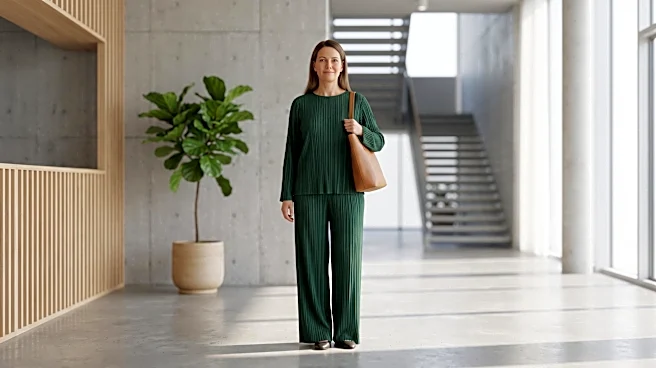
designs by Issey Miyake, specifically from his 'Pleats Please' line. The school's official staff photo, which circulated online, showed teachers in pleated garments that bore a striking resemblance to Miyake's distinctive style. However, Ms. Lam Montessori clarified via Instagram that while the uniforms feature a similar pleated aesthetic, they are not Issey Miyake originals. Instead, the garments are sourced from Takashi Yamasaki, a Taiwanese brand known for its pleated clothing, which offers a more affordable alternative to Miyake's designs. The school explained that the choice of pleated uniforms was driven by practical considerations such as flexibility, durability, and ease of care, aligning with the functional principles often associated with Issey Miyake's work.
Why It's Important?
This incident highlights the significant influence of fashion trends and designer aesthetics, even in unexpected contexts like school uniforms. The viral nature of the speculation underscores the public's keen eye for design and the power of social media to disseminate and amplify observations, sometimes leading to misattributions. For Ms. Lam Montessori, the clarification was important to manage its public image and address the curiosity surrounding its staff's attire. It also brings attention to the accessibility of certain fashion aesthetics; while high-end designer pieces like Issey Miyake's 'Pleats Please' are often aspirational, brands like Takashi Yamasaki offer similar styles at a more attainable price point. This demonstrates how design principles, such as the functionality and aesthetic appeal of pleats, can transcend luxury markets and become integrated into everyday wear, including professional settings like education. The school's reasoning for choosing pleated uniforms—flexibility, durability, and ease of maintenance—also emphasizes the practical needs of educators, particularly in a hands-on learning environment like Montessori.
What's Next?
The clarification from Ms. Lam Montessori is likely to quell the immediate speculation regarding their uniforms. However, the incident could potentially bring increased attention to Takashi Yamasaki, the Taiwanese brand providing the uniforms, as consumers and other institutions might seek out similar affordable, functional, and stylish options. This could lead to a broader discussion about the adoption of designer-inspired, practical uniforms in various professional settings, particularly those requiring comfort and durability. The event also serves as a reminder of the rapid spread of information and misinformation on social media platforms, prompting organizations to be prepared to address public inquiries and clarify facts swiftly. For the fashion industry, it reinforces the idea that design influence can extend far beyond traditional fashion circles, impacting everyday choices and sparking public interest in the origins and practicality of clothing.
Beyond the Headlines
This story delves into the cultural impact of design and the democratization of fashion. Issey Miyake's 'Pleats Please' line is renowned for its innovative use of pleats, offering both aesthetic appeal and practical benefits like wrinkle resistance and ease of movement. The fact that a school would adopt a similar aesthetic for its teachers' uniforms speaks to the enduring appeal of these design principles. It suggests a deeper appreciation for clothing that combines form and function, moving beyond mere trendiness. Furthermore, the incident touches upon the broader phenomenon of 'dupes' or affordable alternatives to high-end fashion, making desirable aesthetics accessible to a wider audience. This trend challenges traditional notions of luxury and exclusivity in fashion, promoting a more inclusive approach to style. It also highlights how practical considerations, such as the demands of a teaching profession, can drive fashion choices, demonstrating that utility and style are not mutually exclusive.