
What's Happening?
Lucid Group, in collaboration with Nuro and Uber Technologies, has commenced fully driverless robotaxi testing on public roads in the San Francisco Bay Area. This initiative involves operations in Palo
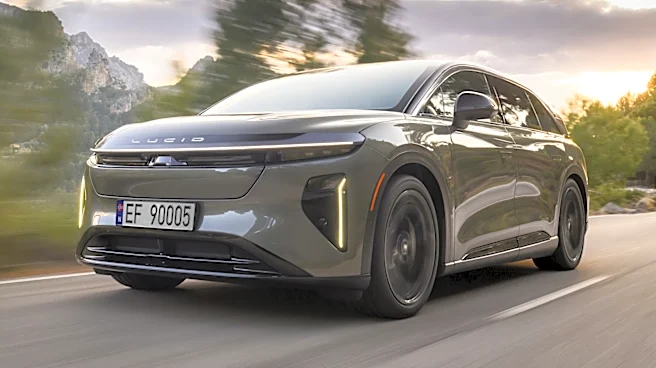
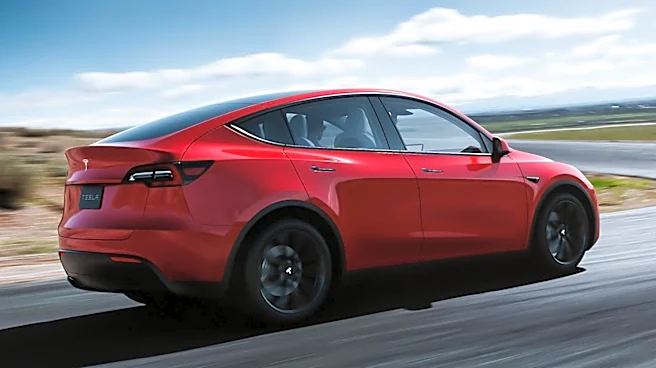
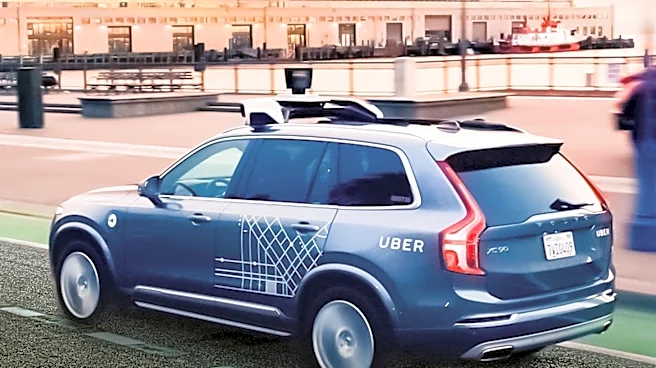
Alto, Mountain View, Los Altos, and Sunnyvale, with plans for expansion to other Bay Area cities next year. Under this partnership, Lucid supplies its Gravity electric SUV and upcoming midsize models, Nuro provides the self-driving technology, and Uber integrates its ride-hailing platform. This development marks a significant step in Lucid's autonomy program, which CEO Silvio Napoli has identified as a key priority for the company's turnaround. The program has already achieved all milestones scheduled through Q3 2026, with over 100 vehicles on the road as of August. Employee rides are expected to begin soon, preceding an anticipated public launch in Q1 2027, with Houston slated as the next city for robotaxi operations in 2027. Uber has committed to purchasing Lucid vehicles for this program, and an initial batch of upgraded vehicles has already been delivered for this phase of testing. Unlike Tesla's camera-centric approach, Lucid's vehicles utilize a combination of cameras, lidar, and radar for their autonomous driving systems.
Why It's Important?
This move is crucial for Lucid Group as it seeks to diversify its revenue streams beyond luxury electric vehicle sales and establish itself as a significant player in the burgeoning autonomous vehicle market. By partnering with Nuro for self-driving technology and Uber for ride-hailing, Lucid aims to leverage established expertise while focusing on its strengths as a vehicle supplier. This strategy contrasts with Tesla's more vertically integrated approach, where it controls most aspects of its autonomous driving and ride-hailing services. For Lucid, a successful robotaxi deployment could provide a new path to revenue that is less dependent on the fluctuating demand for high-end luxury cars, which has been a challenge for the company, as evidenced by its recent Q3 revenue miss and substantial net loss. The expansion into driverless testing also positions Lucid as a direct competitor to other EV manufacturers like Tesla and Rivian, both of which are also advancing their own robotaxi ambitions. The success of this program could significantly influence investor confidence and the company's long-term financial stability, especially as it aims to fund operations into Q4 2027 with its current liquidity.
What's Next?
The immediate next steps for Lucid's robotaxi program involve the commencement of employee rides in the San Francisco Bay Area, followed by a public launch anticipated in Q1 2027. The program is also slated to expand to other Bay Area cities next year, with Houston being the next major market targeted for robotaxi operations in 2027. The performance and safety record during these initial driverless testing phases will be critical in shaping public perception and regulatory approvals. Investors will closely monitor the program's progress, particularly its ability to meet the public launch timeline and demonstrate operational efficiency. Any further announcements from Rivian regarding its upcoming Autonomy and AI Day or developments in potential Tesla-SpaceX merger talks could also influence market valuations for EV makers with robotaxi aspirations, including Lucid. The company's ability to successfully scale its robotaxi operations and generate meaningful revenue from this venture will be a key determinant of its future growth and profitability, especially as it bridges to planned midsize vehicle production.
Beyond the Headlines
The initiation of driverless robotaxi testing by Lucid, Nuro, and Uber highlights a broader industry trend towards collaborative ecosystems in the autonomous vehicle space. Instead of each company developing every component in-house, strategic partnerships are emerging as a viable model to accelerate deployment and mitigate risks. This approach allows companies like Lucid to focus on vehicle manufacturing, while specialized firms like Nuro handle the complex self-driving software, and established platforms like Uber manage customer logistics. This division of labor could lead to faster innovation and more robust systems by leveraging individual strengths. Furthermore, the differing technological approaches—Lucid's use of cameras, lidar, and radar versus Tesla's camera-only strategy—will provide valuable real-world data on the efficacy and safety of various sensor suites in diverse urban environments. The success or failure of these distinct methodologies could influence future industry standards and regulatory frameworks for autonomous driving, potentially shaping the long-term trajectory of urban mobility and transportation services.