





What's Happening?
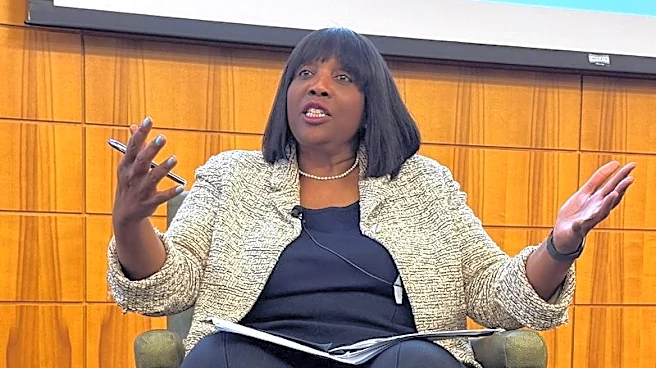
The Federal Reserve Bank of New York has released an analysis on how artificial intelligence (AI) is influencing the labor market and hiring practices. The report, authored by Research Director Kartik B. Athreya, highlights that while AI adoption is increasing
across various industries, it has not yet led to significant job losses. Instead, AI is reshaping the skills required for employment, with firms reporting a shift in hiring patterns towards AI-proficient workers. The analysis also notes that businesses are more inclined to retrain existing employees rather than lay them off, as AI automates certain tasks. This trend suggests that AI's impact on the labor market may be more evolutionary than disruptive in the short term.
Why It's Important?
The findings of the Federal Reserve's analysis are significant as they provide insights into the evolving dynamics of the labor market in the context of AI adoption. The shift towards AI-driven skills highlights the need for workforce retraining and adaptation, which could influence educational and vocational training programs. Additionally, the report underscores the importance of understanding AI's broader economic implications, including potential changes in consumer behavior and market demands. As AI continues to integrate into various sectors, its impact on employment and economic structures will be a critical area of focus for policymakers and industry leaders.
What's Next?
As AI technology continues to advance, businesses and policymakers will need to address the challenges and opportunities it presents. This includes developing strategies for workforce retraining and ensuring that the benefits of AI are equitably distributed. The Federal Reserve's ongoing research will likely continue to monitor AI's impact on the labor market, providing valuable data to inform policy decisions. Additionally, there may be increased discussions around implementing safety nets, such as universal basic income, to mitigate potential job displacement effects.
Beyond the Headlines
The integration of AI into the labor market raises ethical and societal questions about the future of work and economic inequality. As AI automates more tasks, there is a risk of widening the gap between those with AI-related skills and those without. This could lead to increased economic disparity and necessitate policy interventions to ensure inclusive growth. Furthermore, the potential for AI to influence consumer behavior and market dynamics could have long-term implications for economic stability and growth.