








What's Happening?
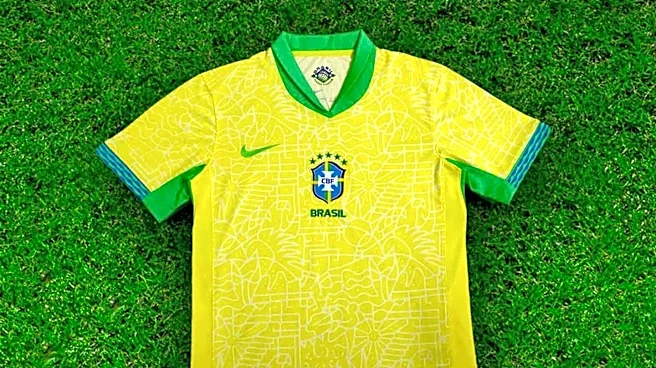
The global football shirt market, valued at $5.7 billion in 2023, is experiencing significant challenges due to counterfeit products and a growing interest in retro shirts. The market is plagued by counterfeit losses estimated at €600 million annually,
according to UEFA. Iconic shirts, such as Maradona's 'Hand of God' shirt, have fetched record prices at auctions, highlighting the investment potential of authentic match-worn shirts. The retro market is growing at a 12% CAGR, with vintage shirts from the 1980s-2000s becoming highly sought after. The market is also influenced by star players, with shirts like Messi's Argentina home shirt becoming bestsellers following major tournaments.
Why It's Important?
The prevalence of counterfeit football shirts poses a significant threat to clubs' revenues and brand integrity. Counterfeit products not only undermine the financial health of clubs but also affect the authenticity and value of genuine merchandise. The rise in retro shirt collecting indicates a shift in consumer preferences towards nostalgia and authenticity, which could influence future market trends. This trend also highlights the importance of rigorous authentication processes to protect consumers and maintain market integrity. The football shirt market's dynamics reflect broader challenges in the global apparel industry, where counterfeiting and changing consumer tastes continue to impact business strategies.
What's Next?
As the market evolves, clubs and manufacturers are likely to invest more in anti-counterfeiting technologies and strategies to protect their revenues. The continued growth of the retro market suggests that brands may focus on releasing limited edition and vintage-inspired collections to capitalize on consumer interest. Additionally, the role of star players in driving shirt sales will remain crucial, with clubs leveraging player marketing to boost merchandise revenue. The industry may also see increased collaboration between clubs and technology firms to enhance counterfeit detection and improve consumer trust in authentic products.