







What's Happening?
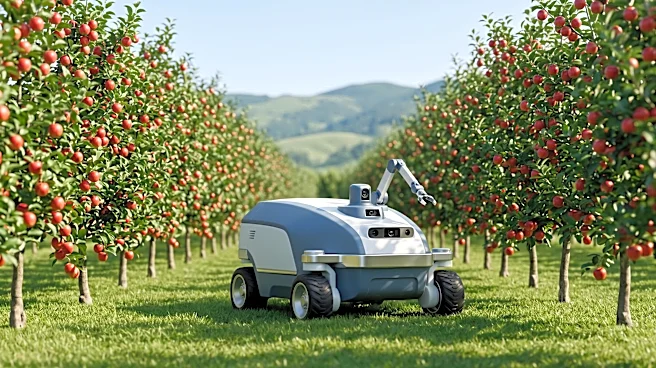
FIRA USA 2026 is relocating from California to Yakima, Washington State, to focus on the specific needs of Pacific Northwest growers. The event, scheduled from October 20 to 22, will immerse attendees in agricultural technology and robotics, offering
solutions for orchards, vineyards, vegetables, hops, and berries. This year, FIRA USA is expanding its scope beyond agricultural robotics to encompass the full spectrum of agtech. Over 80 exhibitors will showcase more than 40 solutions designed to tackle challenges such as labor scarcity, rising production costs, and narrower working windows due to changing weather patterns. The event is free for growers and farm workers and will feature three demo zones for in-field demonstrations of specialty crop solutions. Co-organizers GOFAR and the Yakima County Development Association have emphasized the event's unique in-field aspect, aiming to bridge the gap between demonstrated agtech solutions and their practical application on farms. The event will also introduce the first grower-led innovation award to recognize farmers who contribute to agricultural technology development.
Why It's Important?
The shift of FIRA USA to the Pacific Northwest highlights the increasing recognition of regional agricultural challenges and the growing demand for tailored technological solutions in the U.S. agricultural sector. Labor scarcity and rising production costs are significant hurdles for American farmers, impacting food supply chains and the economic viability of agricultural operations. By focusing on agtech and robotics, FIRA USA aims to provide practical tools that can enhance efficiency, reduce reliance on manual labor, and mitigate the financial pressures faced by growers. The event's emphasis on specialty crops, such as those found in the Pacific Northwest, underscores the diverse needs within U.S. agriculture and the potential for technology to support niche markets. The introduction of a grower-led innovation award also signifies a move towards empowering farmers in the development and adoption of new technologies, ensuring that solutions are relevant and effective for real-world farming conditions. This initiative could foster greater innovation and collaboration within the U.S. agricultural technology landscape.
What's Next?
FIRA USA 2026 will take place from October 20 to 22 at the State Fair Park in Yakima, Washington State. The event is expected to attract over 2,500 visitors, including growers, researchers, manufacturers, investors, and technology builders. Attendees will have the opportunity to explore critical industry challenges, engage in strategic collaborations, and witness in-field demonstrations of various agtech solutions. The inaugural grower-led innovation award winner will be announced during the event, recognizing a farmer who has significantly contributed to agricultural technology. Following the event, Future Farming will provide comprehensive coverage of the developments, news, and firsthand experiences shared by growers regarding automation and robotics. The insights and connections made at FIRA USA are anticipated to drive further adoption of agtech in the Pacific Northwest and potentially influence broader trends in U.S. agriculture, as solutions for labor, cost, and weather challenges become more widely implemented.
Beyond the Headlines
The focus on agtech and robotics at FIRA USA 2026 reflects a broader trend in U.S. agriculture towards precision farming and automation, driven by economic pressures and environmental concerns. The integration of advanced technologies can lead to more sustainable farming practices, optimizing resource use and reducing environmental impact. However, the adoption of these technologies also raises questions about digital literacy among farmers, access to capital for investment in new equipment, and the potential for job displacement in traditional agricultural labor. The event's emphasis on bridging the gap between technology demonstrations and practical farm applications is crucial for ensuring that these innovations are accessible and beneficial to a wide range of growers. Furthermore, the development of region-specific solutions, as highlighted by the move to the Pacific Northwest, suggests a more nuanced approach to agricultural technology, acknowledging the diverse climates, crops, and operational scales across the U.S. This localized approach could foster more effective and equitable technological advancements in the sector.