

What's Happening?
Experts are providing guidance on how men can enhance their office wardrobes by incorporating luxury vintage clothing. Dominik Halás, a master vintage authenticator for The RealReal, notes that much of the desirable vintage apparel increasingly resembles
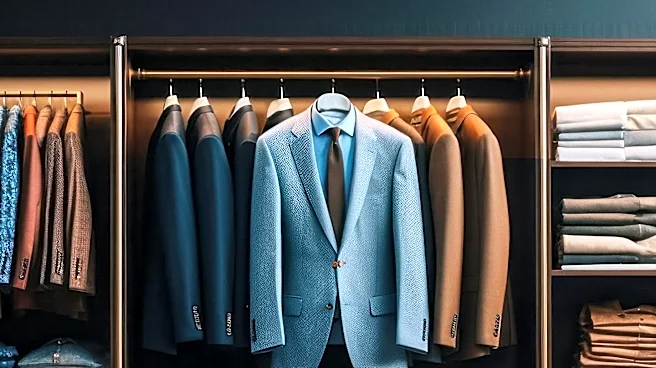
contemporary styles. Elliot Duprey, a management consultant and Instagram influencer, acknowledges that finding quality vintage items can be challenging without experience. However, both experts emphasize that the effort is rewarding, often leading to unique pieces at lower prices than retail, which can help individuals distinguish their style. They offer advice on sourcing luxury vintage versions of office wear staples, including suits, shirts, pants, shoes, and ties, through online platforms such as Depop, The RealReal, eBay, and Poshmark. Key tips include focusing on measurements rather than listed sizes for suits and shirts, and knowing specific brands to seek for different apparel categories.
Why It's Important?
This trend is significant for the U.S. fashion industry and consumers as it highlights a growing shift towards sustainable and value-conscious shopping. The booming second-hand market, valued at $257 billion in 2025 by resale site ThredUp, indicates a substantial economic movement. For consumers, particularly men seeking to build a professional wardrobe, this offers an opportunity to acquire high-quality, often luxury, items at a fraction of their original cost. This approach not only provides economic benefits but also promotes sustainability by extending the life cycle of clothing and reducing demand for new production. It challenges traditional retail models and encourages a more discerning approach to fashion, where uniqueness and craftsmanship are prioritized over fast-fashion trends. This movement could also impact luxury brands, potentially influencing their strategies regarding product longevity and secondary market engagement.
What's Next?
The increasing interest in luxury vintage office wear suggests a continued expansion of the second-hand market, particularly in specialized segments. More online platforms and physical stores may emerge to cater to this demand, offering curated collections and authentication services. Consumers are likely to become more educated about vintage shopping, seeking out specific brands and learning how to assess quality and fit. This trend could also inspire more men to explore sustainable fashion choices, broadening the appeal of second-hand clothing beyond casual wear. Luxury brands might respond by either embracing the resale market through partnerships or by emphasizing the timelessness and durability of their new collections to compete with the allure of vintage pieces. Educational content, like Duprey's Instagram guides, will likely continue to play a crucial role in demystifying vintage shopping for new enthusiasts.
Beyond the Headlines
Beyond the practical aspects of cost savings and unique style, the embrace of luxury vintage clothing reflects a deeper cultural appreciation for craftsmanship, history, and individuality. In an era of mass production and fleeting trends, choosing vintage items allows individuals to express a more personal and curated aesthetic, moving away from uniform, brand-driven consumption. This trend also carries ethical implications, as it supports a more circular economy and reduces the environmental footprint associated with new garment manufacturing. It challenges the stigma often associated with 'used' items, elevating them to a status of desirability and value. The act of seeking out and restoring vintage pieces can also be seen as a form of connoisseurship, fostering a deeper connection to clothing and its origins, rather than treating it as disposable. This shift could contribute to a broader re-evaluation of consumption patterns across various product categories.