



What's Happening?
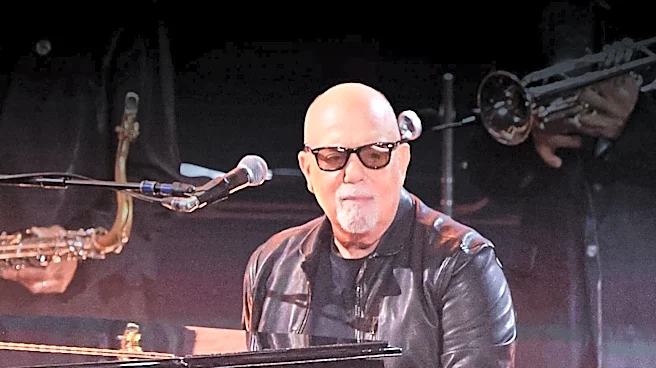
Billy Joel, the renowned American singer-songwriter, crafted several of his most famous songs based on real-life individuals and events. For instance, his song 'Leningrad' was inspired by Victor Razinov, a Russian clown Joel met during a 1987 concert
in Leningrad amidst the Cold War. The song explores the differing perspectives of Americans and Soviets, using Joel and Razinov's upbringings as examples of the conflict's impact. Another notable song, 'Captain Jack,' from his album 'Piano Man,' originated from Joel's observation of a drug dealer operating near his Oyster Bay, Long Island home. Joel witnessed the dealer selling drugs to teenagers, prompting him to write what he describes as an 'anti-drug song,' viewing drug use as a 'pathetic loser' approach to life. Additionally, 'Big Shot,' featured on his album '52nd Street,' was inspired by a dinner date with Mick Jagger and Bianca Jagger. Joel noted Bianca's 'putting on the ritz' behavior and Mick's apparent frustration, suggesting the song reflects Mick's reaction rather than Joel's direct criticism of Bianca.
Why It's Important?
The practice of drawing inspiration from real-life characters and events is a significant aspect of songwriting, allowing artists like Billy Joel to create relatable and impactful narratives. This approach provides a unique lens through which listeners can understand societal issues, personal struggles, and historical contexts. For example, 'Leningrad' offered a humanized perspective on the Cold War, fostering empathy and understanding between different cultures during a period of geopolitical tension. 'Captain Jack' served as a cautionary tale against drug abuse, reflecting a prevalent social concern and potentially influencing public perception. The personal anecdotes behind songs like 'Big Shot' also offer insights into the lives of public figures and the dynamics of celebrity culture, adding layers of depth and authenticity to the music. This method of songwriting not only enriches the artistic landscape but also contributes to the cultural dialogue by reflecting and commenting on the human experience.
What's Next?
While these songs are already established classics, their continued relevance lies in their ability to resonate with new generations. Educational institutions and cultural programs may continue to use these songs as examples of storytelling through music, particularly in discussions about historical events like the Cold War or social issues such as drug abuse. The biographical elements within Joel's work could also inspire future artists to explore similar methods of drawing from personal observations and encounters to create meaningful art. Furthermore, the enduring popularity of these tracks ensures their presence in future retrospectives, documentaries, and analyses of Billy Joel's career, solidifying their place in American music history.
Beyond the Headlines
The use of real-life characters in songwriting raises interesting ethical and artistic considerations. While it can lead to deeply authentic and powerful works, it also touches upon the boundaries of privacy and representation. Artists must navigate the line between inspiration and exploitation, particularly when depicting sensitive subjects or identifiable individuals. In Joel's case, his interpretations often served a broader commentary, whether on geopolitical tensions or social ills, rather than mere caricature. This approach highlights the transformative power of art to distill complex realities into accessible and emotionally resonant forms. The enduring appeal of these songs also underscores the universal human desire for connection and understanding, as listeners find echoes of their own experiences and observations within the narratives crafted by artists like Billy Joel.