










What's Happening?
David Pierce, a tech journalist and editor-at-large, has shared insights on the role of artificial intelligence (AI) in productivity during a podcast interview. Pierce, known for testing numerous productivity tools, discussed the current capabilities
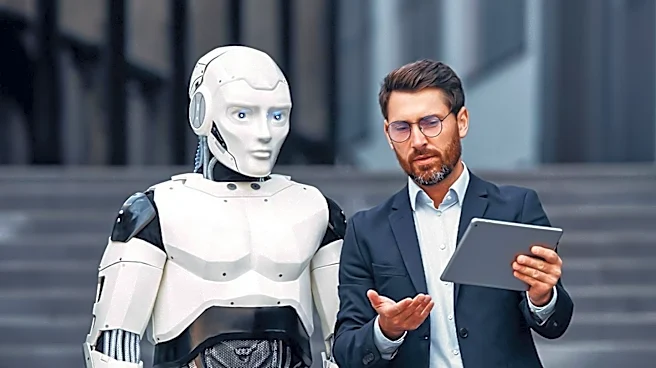
and limitations of AI in the workplace. He noted that while AI can efficiently handle repetitive tasks, it struggles with tasks requiring judgment and understanding. Pierce emphasized that AI should be viewed as a tool to offload mundane tasks rather than a replacement for human decision-making. He also highlighted the importance of maintaining a single source of truth in productivity systems to avoid confusion and inefficiency.
Why It's Important?
The discussion sheds light on the evolving role of AI in the workplace, particularly in enhancing productivity. As businesses increasingly integrate AI into their operations, understanding its strengths and limitations is crucial for maximizing its benefits. Pierce's insights suggest that while AI can significantly reduce the time spent on routine tasks, it cannot yet replace human intuition and decision-making. This perspective is vital for organizations aiming to leverage AI effectively without over-relying on it. The conversation also underscores the need for individuals and businesses to adapt to technological advancements while maintaining critical thinking and problem-solving skills.
Beyond the Headlines
The broader implications of AI in productivity extend to ethical and societal considerations. As AI continues to evolve, questions about data privacy, job displacement, and the ethical use of technology become increasingly relevant. The conversation around AI's role in productivity also touches on the need for regulatory frameworks to ensure responsible use. Additionally, the integration of AI in the workplace may lead to shifts in workforce dynamics, requiring new skill sets and training programs to prepare employees for a tech-driven future.