

What's Happening?
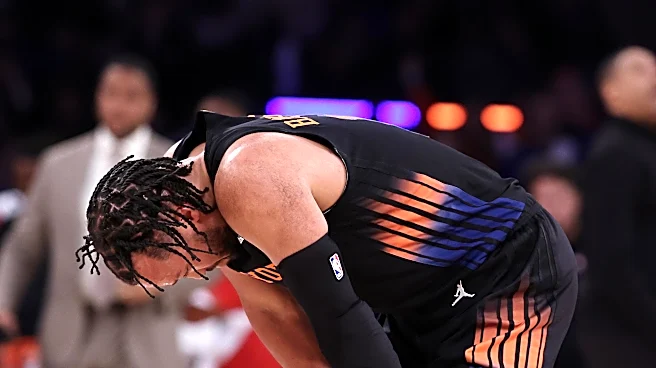
New York Knicks veteran forward Josh Hart has publicly admitted to struggling with his mental health, stating he is not in a good headspace and needs to figure out how to improve it, alongside his on-court performance. This revelation comes during a challenging
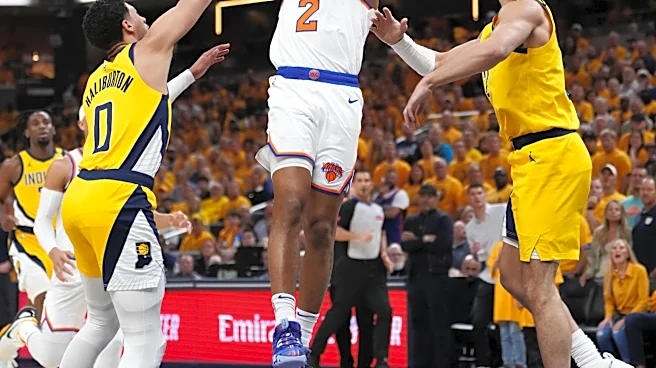
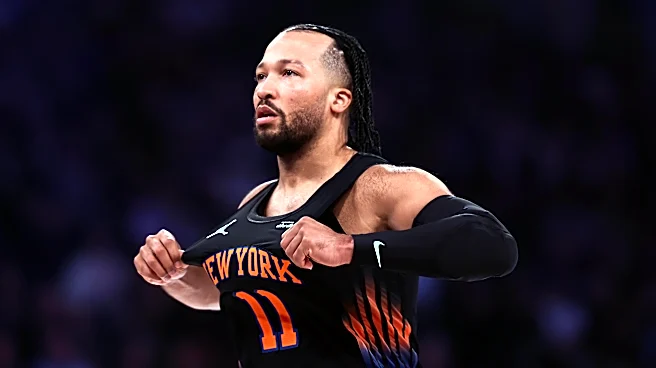
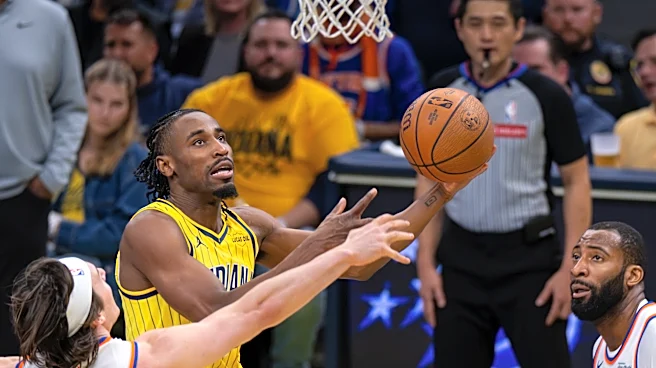
start to the season for the defending champions, who have seen several key players, including Finals MVP Jalen Brunson and Mikal Bridges, underperform. Hart's struggles are reflected in his current shooting percentages, which are significantly lower than last season. He is averaging 7.3 points and shooting 36% from the field, a stark contrast to his over 50% field goal and 40% three-point shooting from the previous season. His comments followed a game against the Pacers where he scored zero points and was benched by Coach Mike Brown. Physical issues, including a calf injury in September and a reaggravated ankle injury, may also be contributing to his performance, though Hart emphasized his mental state.
Why It's Important?
Josh Hart's candid admission about his mental health highlights a growing recognition of mental well-being in professional sports. His role as the emotional center of the Knicks makes his struggles particularly impactful, as his emotional presence is a significant factor in team dynamics. The team's overall chaotic title defense, marked by underperforming stars and strategic challenges, underscores the pressure athletes face. Hart's situation could influence how professional sports organizations address player mental health, potentially leading to more robust support systems. For the Knicks, Hart's performance is crucial, and his current struggles could force difficult decisions regarding his future, including potential trade considerations, especially given his upcoming contract extension talks. The team's ability to navigate these challenges will be critical for their season and could set a precedent for how player well-being is managed alongside competitive demands.
What's Next?
The immediate focus for Josh Hart will be on addressing his mental health and improving his on-court performance. Coach Mike Brown faces the challenge of balancing patience with the need for results, as evidenced by Hart's recent benching. The Knicks' front office will also need to consider Hart's contract situation, with extension talks suspended until later in the season. His continued struggles could make the team's decision regarding his future easier, potentially leading to a trade if his performance does not improve. Teammates have expressed support, indicating a mature team environment capable of addressing these issues. The situation could also prompt broader discussions within the NBA about player support systems and the impact of mental health on athletic performance and team success.
Beyond the Headlines
Josh Hart's openness about his mental health struggles carries significant cultural weight, particularly in the often-stoic world of professional sports. Athletes rarely discuss their mental state during periods of poor performance, making Hart's honesty a notable step towards destigmatizing mental health issues. This transparency could encourage other athletes to seek help and foster a more supportive environment across professional leagues. The intersection of physical injuries, mental well-being, and contract negotiations also raises ethical questions about player welfare and the pressures placed on athletes. His situation could spark a deeper conversation about the long-term impact of athletic careers on mental health and the responsibility of teams to provide comprehensive support beyond physical training.