





What's Happening?
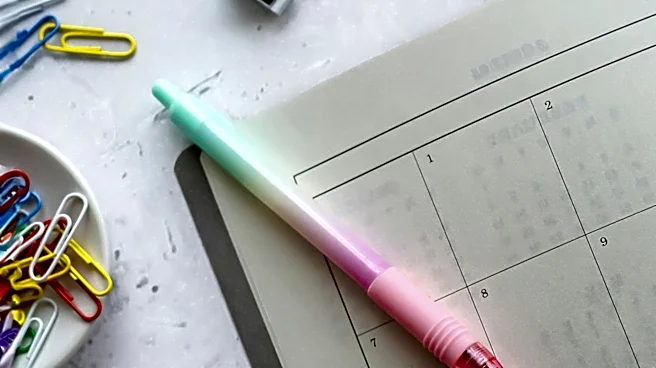
A recent article highlights the enduring popularity of paper planners, particularly those from the stationery brand Papier. Despite the prevalence of digital calendar apps, many individuals find value in the tactile experience of organizing their schedules
with a physical planner. The article discusses the benefits of using a paper planner, such as the ability to focus on daily tasks without digital distractions and the satisfaction of a hands-on approach to time management. The author shares personal experiences of using Papier's planners to manage both academic and professional responsibilities, emphasizing the planner's role in maintaining organization and reducing screen time.
Why It's Important?
The resurgence of interest in paper planners reflects a broader trend towards analog solutions in a digital world. As people seek ways to reduce screen time and manage digital overload, paper planners offer a simple yet effective tool for personal organization. This trend highlights a growing awareness of the need for balance between digital and analog tools, as well as the importance of mindfulness in daily life. The use of paper planners can enhance productivity by providing a structured approach to task management, allowing individuals to prioritize and focus on what truly matters.
What's Next?
As the demand for paper planners continues, companies like Papier may expand their product lines to include more specialized planners, such as financial planners, to cater to diverse organizational needs. The trend towards analog solutions may also inspire other industries to explore similar products that offer a break from digital reliance. For individuals, incorporating a paper planner into their routine could lead to improved time management and reduced stress, as they gain greater control over their schedules and tasks.
Beyond the Headlines
The preference for paper planners over digital apps raises questions about the impact of technology on cognitive processes and mental health. The tactile nature of writing by hand can enhance memory retention and cognitive engagement, offering benefits that digital tools may not provide. This shift towards analog solutions may also reflect a cultural movement towards simplicity and intentional living, as people seek to disconnect from the constant connectivity of the digital world. The popularity of paper planners underscores the value of tangible, hands-on experiences in an increasingly virtual environment.