


What's Happening?
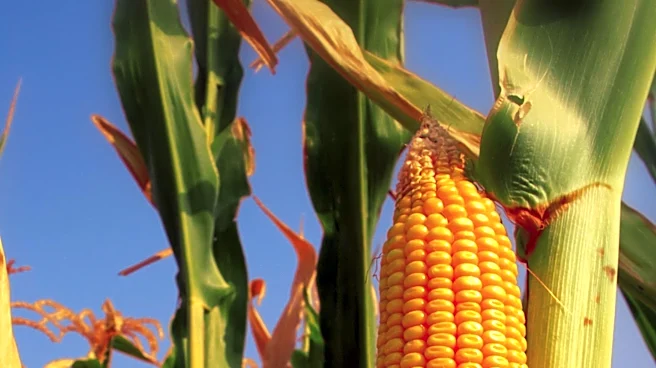
Corn prices have seen a modest increase, with futures rising by 2 to 3 cents on Friday morning. This follows gains made on Thursday, where contracts closed 1 ¼ to 2 ¼ cents higher. The CmdtyView national average Cash Corn price also rose by 1 ½ cents to $4.09
¾. However, the USDA's Export Sales data revealed a marketing year low of 116,740 metric tons for the 2025/26 period, marking a 31.5% decrease from the same week last year. South Korea and Colombia were the primary buyers. For the 2026/27 period, sales were reported at 1.027 million metric tons, slightly below the previous week's high. Analysts are anticipating the August Crop Production report, with expected yields at 182.4 bushels per acre and production estimated at 15.934 billion bushels. Brazilian corn exports in July were reported at 1.943 million metric tons, a decrease from the previous year.
Why It's Important?
The modest increase in corn prices comes amidst a backdrop of declining export sales, which could impact U.S. farmers and the agricultural sector. The decrease in export sales, particularly to key markets like South Korea and Colombia, suggests potential challenges in maintaining competitive pricing and market share. The anticipated Crop Production report will be crucial in determining future market dynamics, as it will provide insights into yield expectations and production levels. The data from Brazil, a major competitor in the global corn market, indicates a significant drop in exports, which could influence global supply and demand dynamics. These factors combined could affect pricing strategies and profitability for U.S. corn producers.
What's Next?
The upcoming August Crop Production report from the National Agricultural Statistics Service (NASS) will be a key event, providing updated yield and production estimates. Market participants will be closely watching these figures to adjust their strategies accordingly. Additionally, the response from international buyers to current U.S. pricing and export levels will be critical in shaping future trade dynamics. The potential for increased competition from Brazil and other exporters could also influence U.S. market positioning. Stakeholders in the agricultural sector will need to monitor these developments to navigate the evolving market landscape effectively.