





What's Happening?
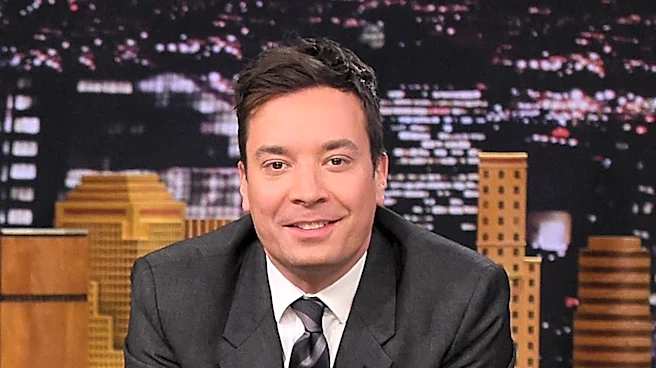
Jimmy Fallon's September 27 episode of 'The Tonight Show' garnered 1.757 million total viewers and 467,000 adults aged 18-49. This performance marks the show's third-largest total audience for the year and its second-highest demographic performance. However,
among the ten post-Sunday Night Football editions of 'The Tonight Show' since 2019, this particular episode recorded the smallest total Live+Same Day audience and the second-smallest demographic audience. The broadcast began at an unusually late time of 12:56 a.m. ET, a delay attributed to a marathon football game preceding it. In other news, Howard Stern has questioned the friendship between Jimmy Kimmel and Fallon, while Fallon has publicly expressed support for Kimmel. Additionally, Fallon used his monologue to joke about Karoline Leavitt's potential tell-all memoir, offering humorous predictions for its title and content, with a comedic take on the book and the Trump administration.
Why It's Important?
The viewership numbers for 'The Tonight Show' provide insight into the dynamics of late-night television and the impact of scheduling on audience engagement. Despite a late start, the episode's strong performance in overall viewership and key demographics indicates a resilient audience base for Jimmy Fallon. The comparison to previous post-Sunday Night Football episodes highlights the significant influence of lead-in programming and broadcast timing on viewership figures. This data is crucial for networks and advertisers in understanding audience behavior and optimizing programming schedules. The comedic commentary on political figures and events, such as the Trump administration and Karoline Leavitt's potential memoir, underscores the role of late-night shows in shaping public discourse and offering satirical perspectives on current affairs. The public discussion surrounding the friendship between Jimmy Kimmel and Fallon also reflects the interconnected nature of celebrity culture and its impact on public perception within the entertainment industry.
What's Next?
Future episodes of 'The Tonight Show' will likely continue to navigate the competitive landscape of late-night television, with viewership numbers remaining a key metric for success. The show's producers will continue to strategize on scheduling and content to maintain and grow its audience. The ongoing comedic commentary on political developments and public figures is expected to persist, reflecting the show's established format and its role in contemporary satire. The interactions and relationships among late-night hosts, as exemplified by the discussion surrounding Jimmy Kimmel and Fallon, may continue to be a topic of interest within the entertainment industry and among viewers. The impact of lead-in programming, particularly major sporting events, will remain a critical factor in determining immediate viewership spikes and overall audience reach for special broadcasts.
Beyond the Headlines
The fluctuating viewership of 'The Tonight Show' underscores broader trends in media consumption, particularly the shift towards on-demand content and the challenges faced by traditional linear television. The reliance on major live events, such as football games, to boost late-night ratings highlights the diminishing power of scheduled programming in an era of fragmented audiences. The comedic treatment of political figures and events by hosts like Jimmy Fallon reflects the evolving role of satire in public discourse, often serving as a primary source of political commentary for many viewers. This trend raises questions about the intersection of entertainment and news, and how humor can both inform and influence public opinion. The public scrutiny of celebrity friendships and rivalries also points to the pervasive nature of media narratives in shaping perceptions of public figures, extending beyond their professional roles into their personal lives.