



What's Happening?
AAA anticipates a slight decrease in Thanksgiving travel for Marylanders this year, with nearly 1.5 million people expected to travel more than 50 miles from home. This projection includes travel by road, air, and other modes like bus, train, or cruise.
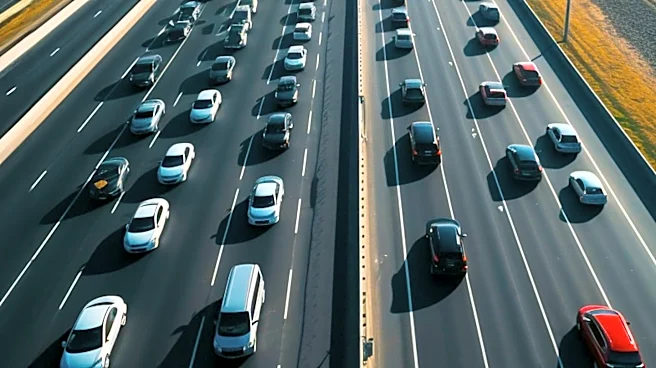
Nationally, AAA projects 81.5 million people will travel for the holiday. Ragina Ali, a AAA spokesperson, attributes this slight decline to rising costs, particularly higher gas prices. Maryland drivers are currently paying over 60 cents per gallon more than they did last Thanksgiving. While car and plane travel are expected to be slightly lower, there's a significant increase projected for other forms of transportation, especially trains and cruises. Travelers interviewed expressed concerns about the expense, with one driver noting an $80 fill-up for his Hummer. AAA advises travelers to plan their departure times carefully to avoid peak congestion, especially on Tuesday, which is expected to be the busiest travel day on the Baltimore-Washington Parkway northbound.
Why It's Important?
The projected decline in Thanksgiving travel for Marylanders, primarily due to rising costs, highlights the significant impact of inflation and fuel prices on consumer behavior and discretionary spending. Higher gas prices directly affect household budgets, potentially forcing families to cut back on travel or other holiday expenses. The shift towards alternative transportation methods like trains and cruises suggests that consumers are actively seeking more cost-effective travel options or are adapting to the economic landscape. This trend could have broader implications for the travel and hospitality industries, as well as for local economies that rely on holiday tourism. The increased cost of travel also underscores the ongoing economic challenges faced by many Americans, influencing their ability to participate in traditional holiday gatherings and potentially affecting family connections and social well-being.
What's Next?
As Thanksgiving approaches, travelers in Maryland and across the U.S. will continue to face elevated gas prices and other travel costs. AAA's advice to travel during off-peak hours will likely be heeded by many, potentially leading to less predictable traffic patterns. The observed shift towards trains and cruises could prompt these sectors to further enhance their offerings or marketing strategies to capitalize on this growing demand. If travel costs remain high, future holiday travel seasons may see similar trends, with consumers prioritizing affordability and seeking alternatives to traditional car and air travel. Policymakers and industry stakeholders will likely monitor these trends to understand the broader economic impact and to consider potential measures to alleviate cost burdens for travelers, though immediate relief for the upcoming holiday is unlikely.
Beyond the Headlines
The impact of rising travel costs extends beyond immediate financial burdens, touching upon broader societal and cultural aspects of holiday traditions. The necessity for some families to forgo or scale back Thanksgiving travel due to economic constraints can lead to feelings of isolation or missed opportunities for connection, which are integral to the holiday's spirit. This situation also highlights the vulnerability of discretionary spending to economic fluctuations, revealing how essential activities like family gatherings can become luxuries. Furthermore, the increased reliance on public transportation and cruises, while potentially more environmentally friendly, also points to a systemic adaptation to economic pressures. This could accelerate long-term shifts in travel preferences and infrastructure development, as communities and industries adjust to evolving consumer needs and financial realities.