






What's Happening?
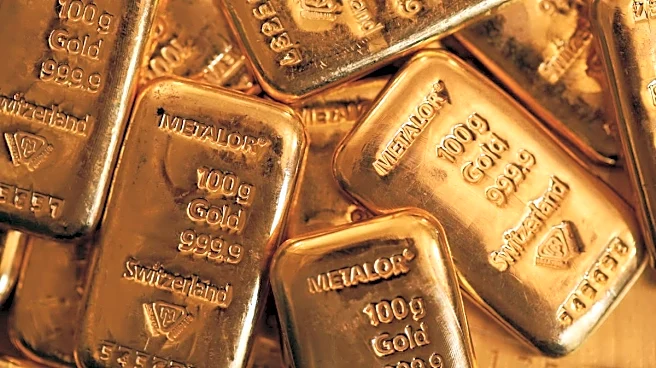
Barclays has forecasted that gold prices will reach $4,791 in 2026 and $4,900 in 2027, as the effects of the Iran conflict diminish and structural drivers reemerge. The bank's analysis attributes the recent 26% decline in gold prices to a stronger U.S.
dollar, buoyant equity markets, and central bank gold sales, particularly from Russia and Turkey. Despite these short-term pressures, Barclays maintains that persistent inflation, policy uncertainty, and central bank demand will continue to support gold prices. The bank's research suggests that these factors are slow-moving but will accumulate over time, leading to a rebound in gold prices as geopolitical tensions ease.
Why It's Important?
The forecast by Barclays highlights the ongoing volatility in the gold market, influenced by geopolitical events and economic policies. The anticipated rise in gold prices could have significant implications for investors and central banks, which may adjust their strategies based on these predictions. Persistent inflation and policy uncertainty are key factors that could drive demand for gold as a safe-haven asset. This scenario underscores the importance of gold in diversifying investment portfolios and managing economic risks. Additionally, the forecasted price increase could benefit gold mining companies, potentially leading to increased investment and exploration activities in the sector.
What's Next?
As the geopolitical situation stabilizes, the focus will shift to how central banks and investors respond to the predicted rise in gold prices. Central banks may increase their gold reserves to hedge against inflation and currency fluctuations. Investors might also seek to capitalize on the anticipated price increase by adjusting their portfolios to include more gold assets. The market will closely monitor inflation trends and policy decisions that could impact gold prices. Furthermore, any changes in the U.S. dollar's strength or equity market performance could influence the trajectory of gold prices in the coming years.