



What's Happening?
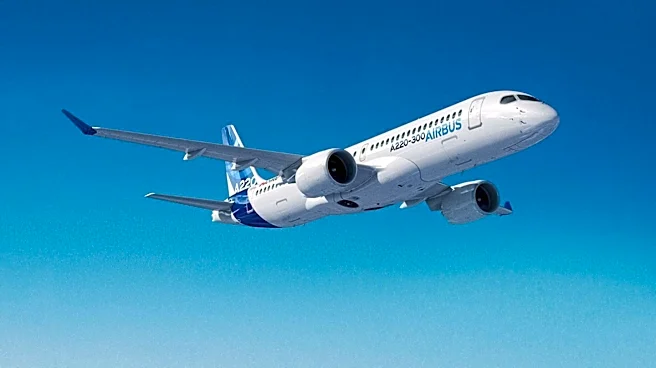
The Airbus A220, initially launched as the Bombardier C Series, has significantly impacted airline networks since its introduction. Originally intended as a replacement for aging regional jets, the A220 has enabled airlines to serve markets that were
previously unprofitable with older aircraft models. The aircraft's lower fuel consumption, extended range, and quieter cabins have allowed carriers to introduce new routes, increase flight frequencies, and connect secondary cities. As of 2025, the A220 network expanded to 1,383 airport pairs operated by 29 airlines, with annual departures exceeding 530,000 flights. Notable airlines like Delta Air Lines and JetBlue Airways have utilized the A220 to enhance their network flexibility and capacity alignment.
Why It's Important?
The A220's introduction has reshaped the aviation industry by enabling airlines to explore new market opportunities and improve operational efficiency. This shift is particularly significant as it aligns with the growing demand for direct connections between secondary cities, bypassing traditional mega hubs. The aircraft's ability to support high-frequency services and open new routes has provided airlines with a competitive edge, allowing them to tap into previously underserved markets. This development is crucial for the U.S. aviation sector, as it supports economic growth by facilitating increased connectivity and accessibility, potentially leading to more tourism and business travel.
What's Next?
As the aviation industry continues to evolve, the A220 is expected to play a pivotal role in future network planning. Airbus projects that the number of medium and small cities will grow faster than megacities, reinforcing the demand for point-to-point services. The upcoming Farnborough International Airshow may reveal further developments, including potential new orders for the A220 and insights into Airbus's strategy for expanding its market presence. Airlines may continue to leverage the A220's capabilities to explore additional unserved city pairs, further enhancing global connectivity.