

What's Happening?
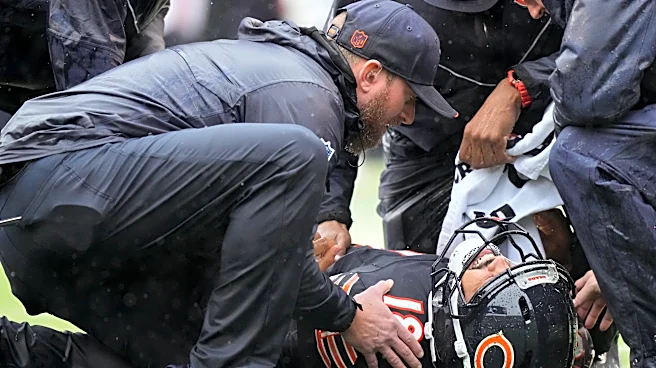
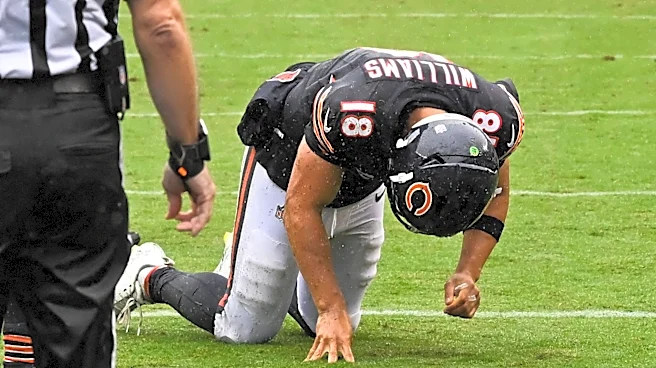
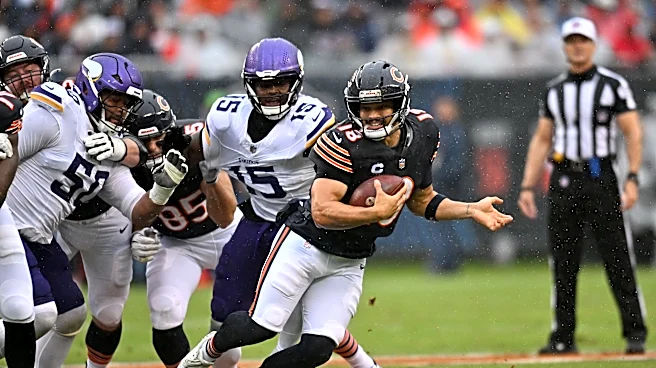
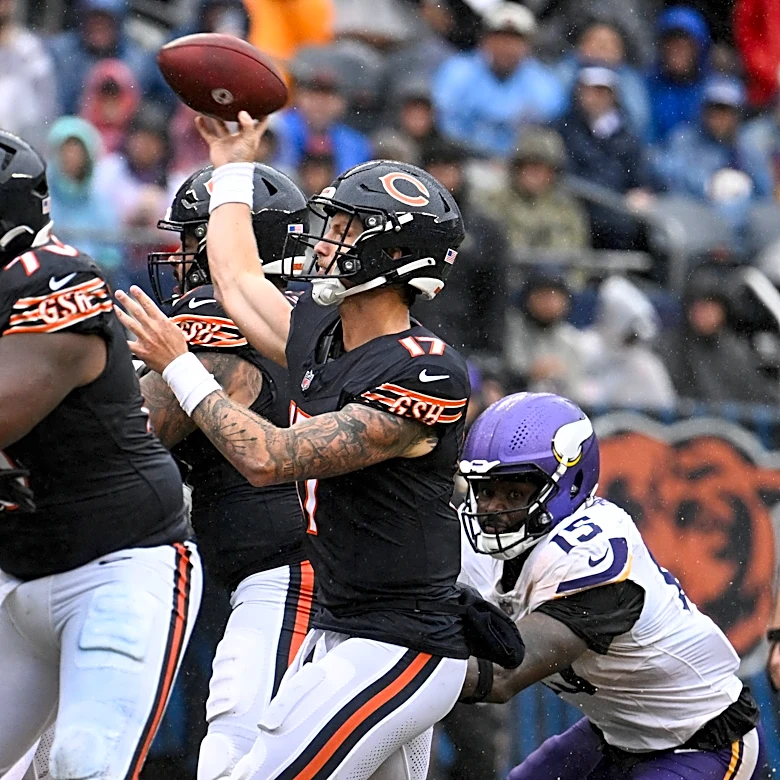
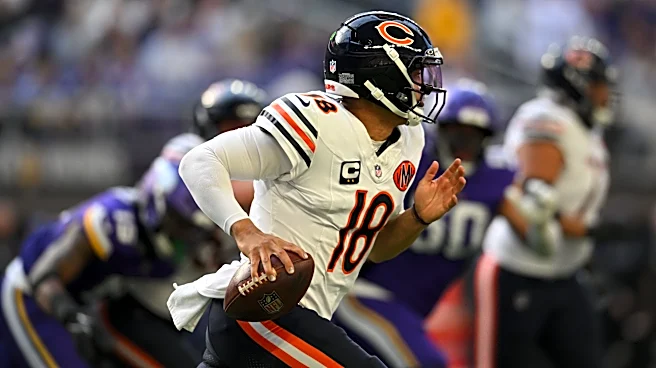
Chicago Bears quarterback Caleb Williams suffered a right hamstring injury during the fourth quarter of Sunday's game against the Minnesota Vikings. The incident occurred while Williams was scrambling on a first-and-goal play, with the Bears trailing
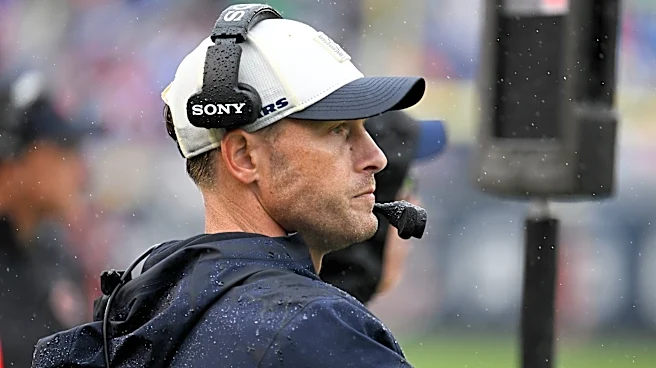
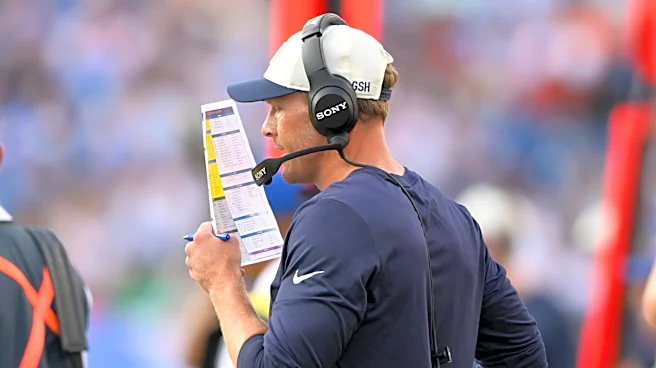
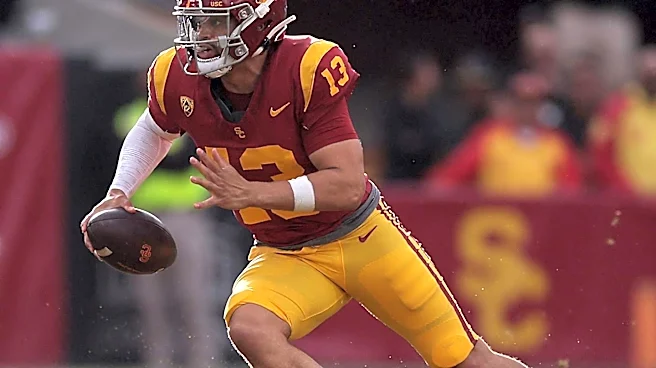
6-3. He appeared to be in significant pain, grabbing his right leg, and had to be helped off the field before being carted to the locker room. This is not Williams' first hamstring injury; he previously injured his left hamstring in December 2022 while playing for USC, though he finished that game and returned a month later without missing a start. Bears head coach Ben Johnson stated after the game that the severity of the injury is currently unknown, and more information will be available following an MRI scheduled for Monday. Despite the pain, Williams is reportedly in 'good spirits' regarding his recovery process. The Bears ultimately lost the game 9-3.
Why It's Important?
The injury to Caleb Williams carries significant implications for the Chicago Bears, particularly given his status as a key player and the team's performance. As a quarterback, his health is central to the team's offensive strategy and overall success. A hamstring injury, depending on its severity, can sideline a player for an extended period, ranging from weeks to several months. This could force the Bears to rely on a backup quarterback, potentially disrupting team chemistry and game plans. For fans and the organization, the uncertainty surrounding Williams' recovery timeline creates anxiety, especially as the team looks to improve its standing. The impact on the team's season trajectory, including their ability to compete in upcoming games, hinges directly on the MRI results and subsequent rehabilitation. A prolonged absence could derail their season aspirations and affect player morale.
What's Next?
The immediate next step for Caleb Williams and the Chicago Bears is the MRI scheduled for Monday. This diagnostic imaging will determine the exact nature and severity of the hamstring injury, providing a clearer timeline for his potential return. Following the MRI results, the team's medical staff will develop a rehabilitation plan. Depending on the severity, Williams could face a recovery period of one to six months. The Bears' coaching staff will need to prepare contingency plans, which may include activating a backup quarterback for their next game against the 2-0 Eagles. The team's performance in the coming weeks will largely depend on how effectively they can adapt to Williams' potential absence and the readiness of other players to step into critical roles.
Beyond the Headlines
Beyond the immediate impact on the Chicago Bears' season, Caleb Williams' injury highlights the inherent physical risks faced by athletes in high-impact sports like professional football. Hamstring injuries, while common, can be particularly frustrating for quarterbacks who rely on mobility and explosive movements. The recurrence of such an injury, even if on the opposite leg, raises questions about long-term conditioning, injury prevention strategies, and the demands placed on young athletes. For the NFL, player safety remains a continuous point of discussion, and incidents like this underscore the need for ongoing research into training methods and protective measures. The psychological toll of repeated injuries on an athlete, especially one early in their career, can also be significant, requiring comprehensive support beyond just physical rehabilitation.