







What's Happening?
Walton Global Investments Ltd., an American-based company, is seeking to construct a large-scale Artificial Intelligence (AI) data center within the Edmonton Energy and Technology Park in Canada. The company has submitted an application to the city to amend
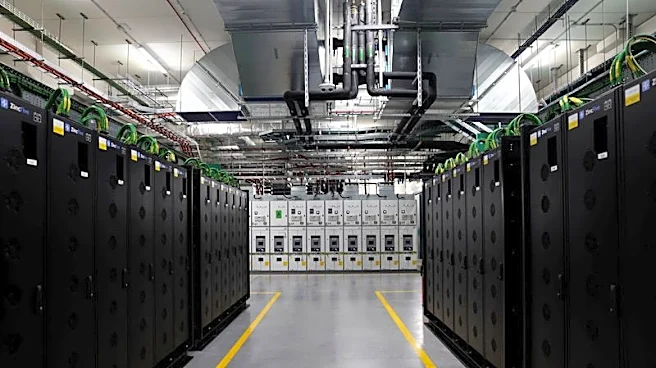
the area structure plan (ASP) for 253 hectares of land, which currently does not permit large-scale data centers in its medium industrial precinct. If the city council approves the ASP amendment, Walton Global would then need to submit a separate application for rezoning the site. The proposed project is described as a 'hyperscale-ready digital infrastructure project' intended to become one of North America's largest data center and computer-oriented industrial districts. The application highlights that high capital costs have been a 'significant deterrent' for companies to locate in the park, which has remained largely undeveloped since its creation in 2010 with the goal of becoming a 'world-class eco-industrial park.'
Why It's Important?
This development is significant as it reflects the growing demand for AI infrastructure and the challenges associated with integrating such large-scale facilities into existing urban planning frameworks. The proposed data center, if approved, could bring substantial economic development to Edmonton, potentially increasing the non-residential tax base. However, it also raises considerable concerns among local residents in nearby neighborhoods like McConachie, Cy Becker, and Horse Hill. These concerns include potential impacts on electricity usage and utility costs, water consumption, noise pollution from cooling equipment, and the effect on property values and local wildlife. The situation underscores the broader tension between economic growth driven by technological advancements and the environmental and social impacts on communities. The city's response to these concerns and its regulatory approach could set a precedent for future large-scale tech developments.
What's Next?
The City of Edmonton initiated public engagement on the proposal on September 28, with feedback being collected until October 25. City administration will compile this public feedback and schedule a public hearing at city hall, where the city council will hear from registered speakers. Concurrently, city planners are conducting a high-level technical review of the proposed development's potential impact on water consumption, with Epcor overseeing water usage. Provincial regulatory bodies, such as the Alberta Utilities Commission, are responsible for approving new power facilities required for the data center. Additionally, Councillor Ashley Salvador has introduced a motion requesting city managers to analyze the tools available to Edmonton to regulate and restrict large-scale data centers. She expects city administration to report back to council by the end of the year to clarify how the city can amend its zoning bylaw to differentiate data centers from other industrial uses, indicating a potential shift in regulatory approaches for such facilities.
Beyond the Headlines
The push to establish a massive AI data center in Edmonton highlights a critical, less obvious implication: the increasing strain on existing infrastructure and resources posed by the rapid expansion of artificial intelligence. The concerns raised by residents regarding electricity, water, and noise are not isolated to this project but are becoming common challenges for municipalities globally as they grapple with the energy-intensive nature of AI data centers. This scenario forces a re-evaluation of urban planning and regulatory frameworks, which were not originally designed to accommodate the unique demands of hyperscale digital infrastructure. The debate also touches upon the ethical dimension of technological progress, questioning whether the economic benefits of AI development outweigh potential environmental and quality-of-life costs for local communities. The outcome in Edmonton could influence how other cities approach the balance between fostering technological innovation and ensuring sustainable, livable urban environments.