






What's Happening?
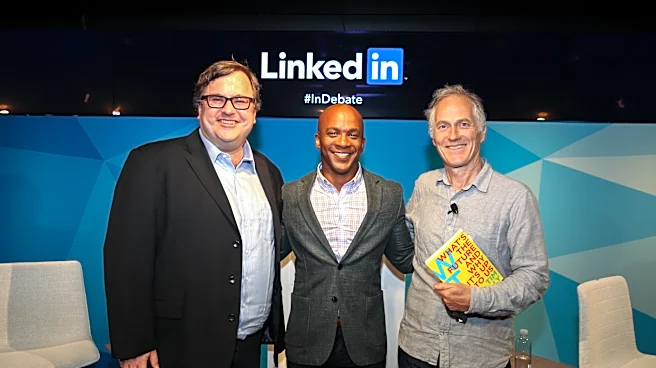
LinkedIn CEO Daniel Shapero has characterized the current job market as 'frozen,' particularly impacting entry-level positions, with nearly 60% of recent graduates struggling to find employment. Despite this challenging environment, Shapero suggests that
Gen Z job seekers possess an advantage due to a perceived innate understanding of AI. Employers are actively seeking young talent, believing them to be more attuned to the latest technology and capable of transforming company operations through AI integration. Alon Chen, CEO of Tastewise, and Grammy-winning artist Will.i.am echo this sentiment, actively seeking Gen Z individuals for their 'AI native' perspective and innovative ideas. Shapero emphasizes that simply applying for jobs is no longer sufficient; networking and building connections within desired companies are crucial for securing employment in this competitive landscape.
Why It's Important?
This assessment from LinkedIn's CEO underscores a significant shift in the U.S. job market, where technological fluency, particularly in AI, is becoming a critical differentiator. The 'frozen' market for entry-level roles could lead to prolonged unemployment for recent graduates, potentially impacting their long-term career trajectories and economic stability. However, the perceived advantage of Gen Z in AI could accelerate the adoption of new technologies across various industries, as companies actively recruit younger talent to drive innovation. The emphasis on networking highlights a return to relationship-based hiring, potentially disadvantaging those without established professional connections. This trend could reshape recruitment strategies, making informal connections as vital as formal qualifications, and potentially exacerbating existing inequalities in access to professional networks.
What's Next?
In response to the 'frozen' job market, job seekers, especially Gen Z, will likely need to prioritize networking and actively seek out connections within their target industries. Companies, in turn, may continue to adjust their hiring practices to favor candidates who demonstrate AI proficiency or a strong aptitude for new technologies. Educational institutions might also face pressure to integrate more AI-focused curricula to better prepare graduates for the evolving demands of the workforce. The long-term implications could include a more AI-driven economy, with a potential widening gap between those who can adapt to technological shifts and those who cannot. The advice to broaden job searches suggests that traditional career paths may become less defined, requiring greater flexibility and adaptability from job seekers.
Beyond the Headlines
The 'frozen' job market and the emphasis on AI proficiency raise deeper questions about the future of work and the role of human capital. The idea of Gen Z as 'AI natives' suggests a generational divide in technological comfort and capability, which could lead to new forms of workplace dynamics and intergenerational collaboration challenges. The increasing reliance on networking for job acquisition could also perpetuate existing social and economic hierarchies, as individuals from privileged backgrounds may have easier access to influential networks. This trend might necessitate a re-evaluation of equitable access to professional development and networking opportunities. Furthermore, the rapid integration of AI into business operations could lead to ethical considerations regarding job displacement, data privacy, and the responsible development and deployment of AI technologies.