







What's Happening?
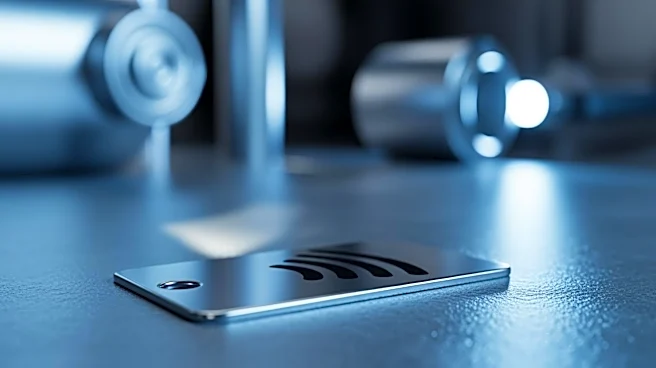
Zebra Technologies is promoting the adoption of Radio Frequency Identification (RFID) technology as a transformative tool for the manufacturing industry. RFID technology, which uses electromagnetic fields to automatically identify and track tags attached
to objects, is being positioned as a critical development for the future of manufacturing. The technology allows for the wireless exchange of information, offering significant advantages over traditional barcode systems, such as not requiring a direct line of sight for scanning. RFID tags can be passive, requiring no battery and suitable for bulk use, or active, with a battery for longer range and additional functionalities like temperature sensing. Zebra Technologies highlights the potential of RFID to improve inventory accuracy, production efficiency, and quality control, while also reducing manual labor and scanning errors. The company emphasizes the importance of integrating RFID into existing manufacturing processes to maintain a competitive edge in the face of economic and geopolitical challenges.
Why It's Important?
The integration of RFID technology in manufacturing is significant as it addresses several operational challenges, including inventory management, production efficiency, and quality control. By providing real-time visibility and reducing manual labor, RFID can enhance productivity and profitability for manufacturers. This technology is particularly crucial as industries face increasing pressure to adapt to new economic realities and technological advancements, such as artificial intelligence. The adoption of RFID can lead to cost savings, improved decision-making, and faster production cycles, which are essential for maintaining competitiveness in a rapidly evolving market. Manufacturers that embrace RFID technology can better manage supply and demand, respond to changing market conditions, and reduce waste and shrinkage, ultimately leading to a more sustainable and efficient manufacturing process.
What's Next?
As RFID technology gains traction, manufacturers are expected to continue integrating it into their operations to capitalize on its benefits. The focus will likely be on expanding the use of RFID in various applications, such as access control, just-in-time manufacturing, and last-mile delivery. Companies may also explore new ways to leverage RFID for enhanced data analytics and process optimization. The success of RFID adoption will depend on the willingness of manufacturers to invest in the technology and the ability to seamlessly integrate it with existing systems. As more companies recognize the value of RFID, it could become a standard tool in the manufacturing industry, driving further innovation and efficiency improvements.