




What's Happening?
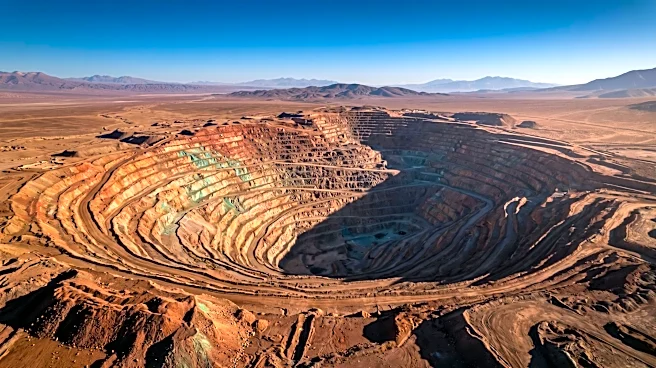
Two labor unions at the Centinela copper mine in Chile have commenced a strike following the breakdown of contract negotiations with Antofagasta Minerals. The decision to strike was made after government-mediated talks failed to yield an agreement. The strike began
at 8 AM local time. Union leaders are advocating for equal benefits for all workers, irrespective of their union affiliation. Antofagasta Minerals has expressed its willingness to continue discussions with union representatives to reach a mutually beneficial agreement. Despite the ongoing strike, the company stated that its projected production figures remain unchanged.
Why It's Important?
This strike in Chile, the world's leading copper producer, carries significant implications for the global copper market. The threat of such labor disputes has historically contributed to upward pressure on global copper prices, especially when combined with existing constraints on output due to operational disruptions, natural events, and declining ore grades. A prolonged strike could further tighten the supply of copper, impacting industries reliant on the metal, including construction, electronics, and renewable energy sectors in the U.S. and globally. For Antofagasta Minerals, the strike could lead to financial losses and operational challenges, even if current production projections remain stable. The outcome of these negotiations could also set a precedent for future labor disputes within the Chilean mining sector, influencing worker benefits and company policies.
What's Next?
Antofagasta Minerals has indicated its readiness to resume discussions with union representatives, suggesting that further negotiations are anticipated. The duration and intensity of the strike will depend on the progress of these talks and the willingness of both parties to compromise. Stakeholders, including global copper buyers and investors, will be closely monitoring the situation for any developments that could affect copper supply and prices. The Chilean government may also continue its mediation efforts to facilitate a resolution. The unions' demand for equal benefits for all workers will likely be a central point of contention in future discussions, potentially influencing labor relations across the mining industry.
Beyond the Headlines
The strike at Centinela highlights broader issues within the global mining industry concerning labor rights, equitable compensation, and the distribution of profits from natural resources. The demand for equal benefits regardless of union affiliation points to underlying tensions regarding fairness and solidarity among workers. This situation could prompt a re-evaluation of labor practices and collective bargaining agreements within the Chilean mining sector, potentially leading to reforms that address disparities in worker treatment. Furthermore, the incident underscores the vulnerability of global supply chains to localized labor disputes, emphasizing the need for resilience and diversification in sourcing critical raw materials. The long-term implications could include increased scrutiny of corporate social responsibility in the mining industry and a push for more standardized worker benefits across different labor groups.