




What's Happening?
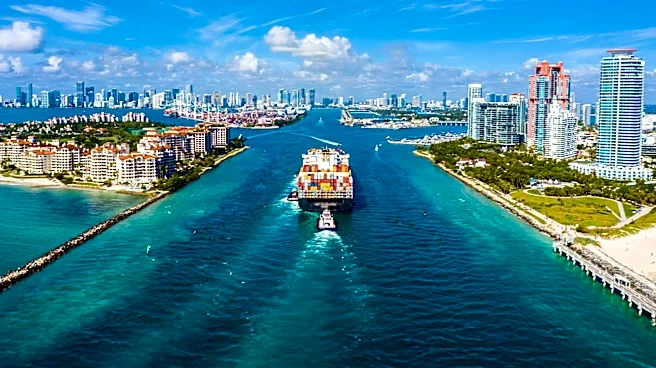
Port Everglades in Florida is embarking on a significant 20-year development plan, projecting $1.7 billion in investments to modernize and expand its cruise facilities. This initiative follows a record-breaking fiscal year 2026, where the port hosted
over 5.38 million cruise guests, surpassing its own long-term projections. To manage this growth, a new cruise services division has been established, led by director Martin Jackson. The port's Deputy Port Director, Glenn Wiltshire, noted that the master vision plan, updated every five years, identified these substantial projects. The upgrades will encompass existing terminals, with plans to renovate Terminal 29 in collaboration with Royal Caribbean, and discussions underway for improvements to Terminals 19 and 21. Additionally, the port aims to implement shore power capabilities across all eight cruise terminals over the next two decades, with initial design phases for Terminal 25 already in progress, supported by federal grants. The port is also addressing increased demand for parking by issuing an RFP for a new parking garage in the mid-port area.
Why It's Important?
This extensive investment by Port Everglades underscores the robust and growing demand within the U.S. cruise industry, particularly in Florida, a major hub for cruise travel. The planned upgrades will enhance passenger experience and operational efficiency, solidifying Port Everglades' position as a leading cruise homeport. The introduction of shore power across all terminals signifies a commitment to environmental sustainability, potentially setting a new standard for other U.S. ports and aligning with broader industry efforts to reduce emissions. The expansion will also create numerous construction jobs and stimulate local economies through increased tourism and port activities. For cruise lines, modernized facilities and improved infrastructure mean smoother operations and potentially higher customer satisfaction, which could lead to increased bookings and revenue. The focus on parking infrastructure reflects a shift in traveler behavior, with more guests opting to drive, highlighting the need for integrated transportation solutions at major ports.
What's Next?
Port Everglades will proceed with the selection of a consultant for the new parking garage design and continue with the design phase for shore power at Terminal 25. Discussions with cruise lines like Royal Caribbean and Carnival Corp. for specific terminal upgrades are expected to advance. The port will also work with Florida Power and Light to establish a substation to support the shore power initiative. Further, the Army Corps of Engineers is studying a project to deepen and widen the inter-coastal waterway, which would improve navigation for both cargo and cruise ships. These developments are part of a continuous effort to accommodate the projected growth in cruise operations, with the port aiming to reach 5.8 million to 6.9 million cruise guests by 2045. The port's 100th anniversary is approaching, and these strategic investments are designed to ensure its continued prominence in the global cruise market.
Beyond the Headlines
The ambitious expansion at Port Everglades highlights a broader trend in the U.S. maritime sector: the need for continuous infrastructure investment to keep pace with evolving industry demands and environmental regulations. The move towards shore power, while costly, reflects a growing imperative for ports to reduce their carbon footprint and improve air quality in surrounding communities. This could influence policy decisions at federal and state levels, potentially leading to more incentives or mandates for similar green initiatives at other U.S. ports. The port's proactive approach to managing growth, including the creation of a dedicated cruise services division, demonstrates a strategic shift towards specialized management within large port authorities. This specialization could become a model for other ports looking to optimize operations for distinct business lines, such as cargo, bulk, or passenger services, ensuring that each segment receives tailored attention and investment.