






What's Happening?
A proposed salary floor in Major League Baseball (MLB) could significantly impact the Chicago White Sox, particularly benefiting their young, pre-arbitration players. If a salary floor is implemented, requiring teams to increase their spending, the White Sox might
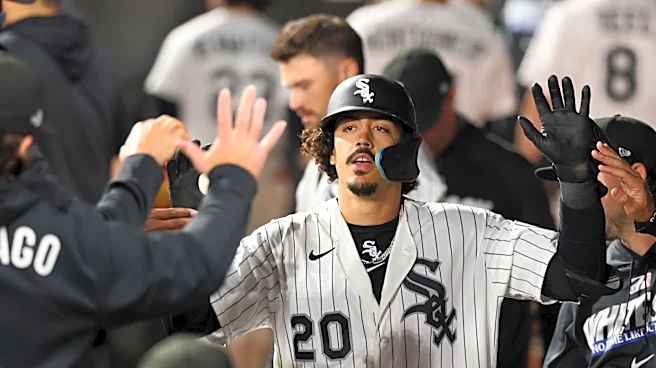
look to offer early contract extensions to promising prospects such as Colson Montgomery, Chase Meidroth, Sam Antonacci, and Tristan Peters. These players, with Meidroth, Antonacci, and Peters having earned Silver Slugger finalist honors, are increasing in value. Securing them with extensions before they reach arbitration could be a strategic move for the team, potentially preventing higher costs later. The organization could also consider pre-MLB contract extensions, similar to a past deal with Luis Robert Jr., for future prospects like Roch Cholowsky or Caleb Bonemer.
Why It's Important?
The potential implementation of an MLB salary floor holds significant implications for team payroll strategies and player development, especially for teams like the Chicago White Sox. For the White Sox, it presents an opportunity to lock in their young talent at potentially more favorable rates before their market value escalates through arbitration. This proactive approach could ensure the retention of key players and provide cost certainty for the team's future roster construction. For the players, early extensions offer financial security and stability, even if it means foregoing the potential for higher earnings in arbitration. This policy could also lead to increased competition for young talent across the league, as all teams would be incentivized to meet the salary floor, potentially driving up player salaries overall. It could reshape how teams manage their payrolls and invest in their minor league systems.
What's Next?
Should the MLB salary floor proposal be adopted, the Chicago White Sox are likely to evaluate their roster and prospect pool to identify candidates for early contract extensions. This could lead to a series of negotiations with their young players, aiming to secure their long-term commitment to the team. The success of these early extensions will depend on various factors, including player performance, market conditions, and the specific terms of the new collective bargaining agreement. Other MLB teams, particularly those with strong farm systems or lower payrolls, would also be expected to adjust their strategies to comply with and leverage the new salary floor. This could usher in a new era of player contract management and team building across the league.
Beyond the Headlines
Beyond the immediate financial and contractual implications, a salary floor could foster a more competitive balance within MLB. Teams that traditionally operate with lower payrolls, like the White Sox, would be compelled to invest more in player talent, potentially leading to a more even playing field across the league. This could benefit fans by increasing the number of competitive teams and making the sport more engaging. However, it also raises questions about the long-term financial sustainability for some franchises and the potential impact on player movement and free agency. The balance between a salary floor and a luxury tax (if both are in place) would be crucial in shaping the economic landscape of professional baseball, influencing everything from player salaries to team valuations and the overall health of the sport.