





What's Happening?
In a recent podcast from Wellington Management, Geopolitical Strategist Thomas W. Mucha, along with investment experts Sean Petersen and Rupinder Vig, explored the reshaping of the space economy by geopolitics, defense spending, and commercial innovation.
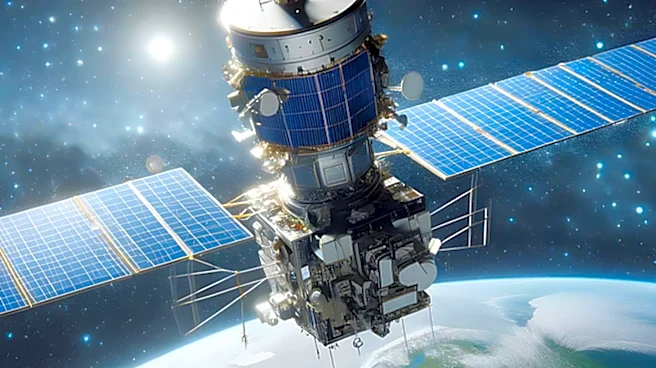
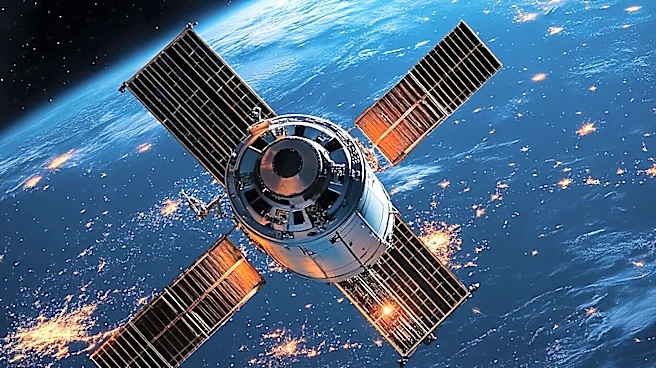
The discussion highlighted that space is no longer a niche technology but critical infrastructure, essential for global communications, GPS, financial transactions, and national security. The space economy, estimated at $626 billion last year, is projected to exceed a trillion dollars by 2034. Key drivers include government commitment to leveraging private sector solutions, particularly in response to recent conflicts, and the rapid growth of private companies in the sector. The experts also delved into the role of AI in space, viewing it as an accelerant for opportunities, particularly in data centers and infrastructure, while acknowledging governmental resistance and data privacy concerns.
Why It's Important?
The transformation of the space economy into critical infrastructure has profound implications for national security, global commerce, and technological advancement. The intersection of great power competition, defense spending, and commercial innovation means that investments in space are no longer solely about exploration but about maintaining geopolitical advantage and economic stability. The shift towards leveraging private sector solutions for governmental needs signifies a new era of public-private partnerships, potentially accelerating innovation and reducing costs. The integration of AI into space infrastructure, from data centers to autonomous systems, promises to enhance capabilities but also introduces new risks related to data security and ethical considerations. This evolving landscape presents both significant investment opportunities and complex challenges for investors and policymakers alike.
What's Next?
The space industry is expected to see continued rapid growth, driven by increasing demand for satellite services, enhanced national security needs, and the integration of advanced technologies like AI. Investors will likely focus on areas such as satellite manufacturing, launch services, and the emerging 'space Roomba' industry for debris removal. The role of AI in space will expand, particularly in data processing and autonomous operations, though governmental adoption may be slower due to security concerns. Geopolitical tensions will continue to fuel defense spending in space, prioritizing missile warning and tracking, and intelligence and surveillance capabilities. The industry will also need to address financial risks associated with new entrants proving scalability and the high capital investment required, alongside the growing concern of space debris and the need for sustainable orbital practices.
Beyond the Headlines
The discussion on the space economy extends beyond immediate investment opportunities to touch upon fundamental shifts in global power dynamics and technological ethics. The characterization of space as the 'ultimate high ground' by policymakers underscores its strategic importance, potentially leading to a new arms race in orbit. The talent flow from government agencies to Silicon Valley space and defense tech firms indicates a blurring of lines between public and private sectors in national security, raising questions about oversight and accountability. The 'Kessler syndrome' and the growing risk of space debris highlight the long-term environmental challenges of space utilization, necessitating international cooperation and innovative solutions for orbital sustainability. Ultimately, the future of space will not only be shaped by technological prowess and economic incentives but also by ethical considerations and the collective responsibility to manage this shared frontier.