




What's Happening?
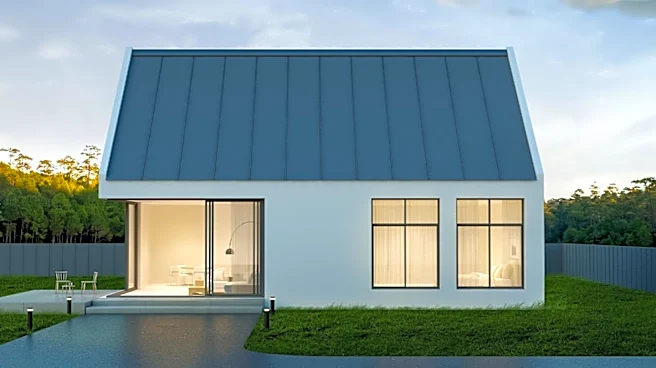
Amazon is now selling prefab container-style tiny homes designed for backyard installation, which can be assembled by consumers without professional help. These structures are marketed as versatile additions to properties, suitable for use as guest houses,
home offices, art studios, or vacation getaways. The tiny homes feature a modern aesthetic and modular design, allowing for customization in size, layout, and finish options to fit individual property and lifestyle needs. They are built with durable materials intended to withstand various outdoor elements, including rain, wind, and sun exposure. The availability of these pre-assembled units on Amazon aims to provide a convenient solution for homeowners looking to expand their living space without undertaking major construction projects.
Why It's Important?
The introduction of self-assemble tiny homes by Amazon signifies a growing trend in the U.S. housing market towards accessible and flexible living solutions. This development could significantly impact the home improvement and real estate sectors by offering a more affordable and less labor-intensive alternative to traditional home extensions. For consumers, it provides an opportunity to add functional space to their properties, potentially increasing property value and accommodating evolving lifestyle needs such as remote work or multi-generational living. The ease of assembly and customization options could democratize access to additional living spaces, making them attainable for a broader demographic. This trend also highlights the increasing influence of e-commerce platforms like Amazon in disrupting traditional industries by offering large-scale, modular housing solutions directly to consumers.
What's Next?
The market for these prefab tiny homes is likely to expand as more consumers seek flexible and cost-effective ways to utilize their property. Amazon's entry into this segment could encourage other retailers and manufacturers to offer similar products, leading to increased competition and innovation in modular housing. Future developments may include a wider range of designs, enhanced customization features, and potentially integrated smart home technologies. There could also be a focus on addressing regulatory challenges related to zoning and building codes for accessory dwelling units (ADUs) in various municipalities, which could either facilitate or hinder widespread adoption. The success of these offerings may also influence the demand for related services, such as electrical and plumbing hookups, as well as interior design and furnishing for these compact living spaces.
Beyond the Headlines
The rise of self-assemble tiny homes reflects a broader cultural shift towards minimalism, sustainability, and efficient use of space. Beyond their practical applications, these structures represent a re-evaluation of traditional housing norms and the pursuit of more adaptable living environments. The ability to easily add a separate living unit to a property could foster new community dynamics, enabling closer family ties through multi-generational living arrangements or supporting local economies by providing short-term rental opportunities. Furthermore, the emphasis on durable materials and potential for off-grid capabilities in some models aligns with growing environmental consciousness. This trend could also spark discussions around urban planning, land use policies, and the definition of 'home' in an increasingly flexible and mobile society.