



What's Happening?
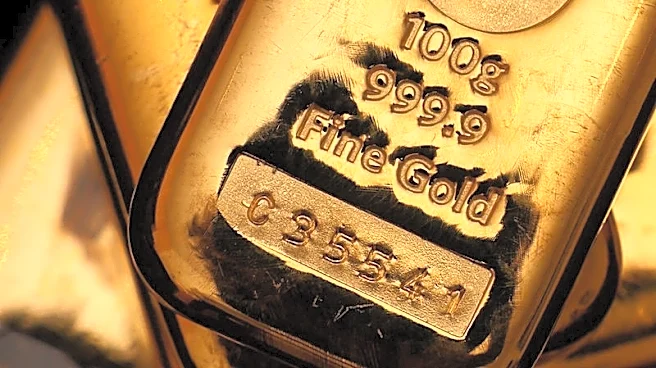
The World Bank, in its October Commodity Markets Outlook, projects that gold prices will remain above $4,000 per ounce through 2028, despite an expected decline from current levels. Gold prices are forecast to average $4,600 an ounce in 2026, a 33.6%
increase from 2025, before falling to $4,250 in 2027 and $4,000 in 2028. This outlook is slightly more bearish than the bank's April forecast. Silver, however, is expected to face a steeper correction after significantly outperforming gold in 2026. The World Bank forecasts silver prices to average $70 an ounce in 2026, a nearly 76% annual gain, but then decline by over 11% to $62 an ounce in 2027 and another 6.5% to $58 in 2028. Despite these projected declines, both precious metals are expected to remain well above historical averages, supported by geopolitical uncertainty and demand for portfolio diversification. The Federal Reserve's September interest rate increase and similar moves by other central banks have created headwinds for non-yielding assets like gold and silver.
Why It's Important?
This forecast is significant for investors and financial markets, particularly those with exposure to precious metals. The World Bank's outlook suggests a period of moderation after a historic rally, indicating that investors should not anticipate a repeat of the explosive gains seen in 2026. For gold, continued central bank purchases and investment demand are expected to provide a solid price foundation, reflecting its role as a safe-haven asset amid global uncertainties. However, the projected decline in silver prices highlights its vulnerability to industrial demand fluctuations, especially as manufacturers in sectors like solar energy explore alternatives to silver. The broader economic context of rising interest rates and a stronger U.S. dollar also impacts the attractiveness of non-yielding assets, potentially shifting investment strategies. The report underscores the ongoing influence of monetary policy decisions on commodity markets and the differing dynamics between gold and silver.
What's Next?
The precious metals market will likely continue to be influenced by global monetary policy, particularly decisions from the Federal Reserve regarding interest rates. Further rate increases or a stronger U.S. dollar could exert additional downward pressure on gold and silver prices. Investors will also monitor geopolitical developments, as escalating tensions could renew safe-haven demand for gold, potentially pushing prices above the World Bank's baseline forecasts. For silver, the evolution of industrial demand, especially in key sectors like solar energy and electronics, will be crucial. Manufacturers' adoption of efficiency improvements and alternative materials could further impact silver's price trajectory. Central bank gold purchases will also be a key indicator, as a sustained increase in official-sector demand could provide additional upside support for gold. The market will also watch for any renewed profit-taking or rapid deleveraging that could amplify selling pressure across precious metals.
Beyond the Headlines
The World Bank's forecast points to a broader recalibration within commodity markets, where the interplay of monetary policy, geopolitical risks, and industrial demand creates a complex environment. The divergence in outlook between gold and silver highlights their distinct market drivers: gold as a primary store of value and hedge against uncertainty, and silver as a dual-purpose metal with significant industrial applications. This distinction implies that while both may face headwinds from tighter monetary policy, silver's price is more susceptible to shifts in global manufacturing and technological innovation. The report also subtly underscores the ongoing search for portfolio diversification by central banks and investors, a trend that is likely to persist given the current global economic and political landscape. The long-term support for both metals, despite projected corrections, suggests an enduring role for precious metals in investment portfolios, albeit with varying degrees of volatility and growth potential.