





What's Happening?
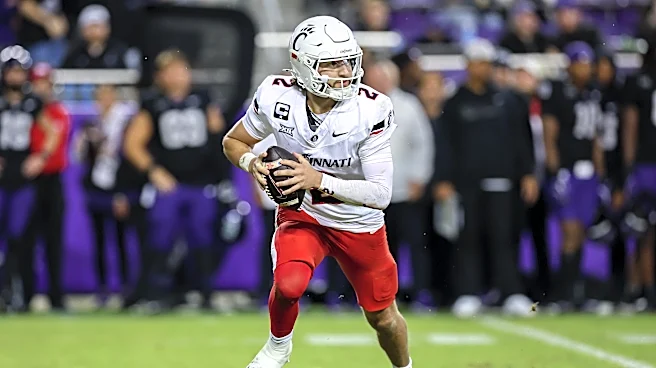
Brendan Sorsby, a former college football player, has been denied entry into the NFL supplemental draft. The NFL cited Sorsby's failure to demonstrate accountability for his actions as the primary reason for the denial. Sorsby was previously ruled ineligible
by the NCAA for gambling violations, which included placing bets on games involving his own team while at Indiana. The NFL's decision was based on a review of Sorsby's case and public records, which revealed significant violations of NCAA rules. The league's counsel, Lawrence P. Ferazani Jr., emphasized that Sorsby did not take responsibility for his actions and attempted to circumvent consequences through litigation and by seeking entry into the supplemental draft. The NFL encouraged Sorsby to prepare for the 2027 NFL Annual Draft instead.
Why It's Important?
This decision underscores the NFL's commitment to maintaining the integrity of its competition by holding players accountable for their actions. The league's stance on gambling violations is particularly significant given the increasing legalization and popularity of sports betting. By denying Sorsby's petition, the NFL sends a clear message that it will not tolerate behavior that undermines the integrity of the sport. This decision could impact other players who might consider similar actions, reinforcing the importance of adhering to league and NCAA rules. It also highlights the potential career consequences for athletes who engage in gambling activities, which could deter future violations.
What's Next?
Brendan Sorsby is encouraged to focus on preparing for the 2027 NFL Annual Draft, as suggested by the NFL. This period could provide him with an opportunity to demonstrate accountability and readiness to adhere to the league's standards. The NFL's decision may prompt Sorsby to address the issues raised by the league and work on rebuilding his reputation. Additionally, this case may lead to further discussions within the NCAA and professional leagues about the handling of gambling violations and the pathways for athletes to return to eligibility.