






What's Happening?
Shark Tank investor Kevin O'Leary recently engaged in a debate with 20 Gen Z workers on Jubilee Media's YouTube series, 'Surrounded.' The discussion, titled '1 Millionaire Boss vs 20 Gen Z Workers,' centered on wealth creation, employee compensation,
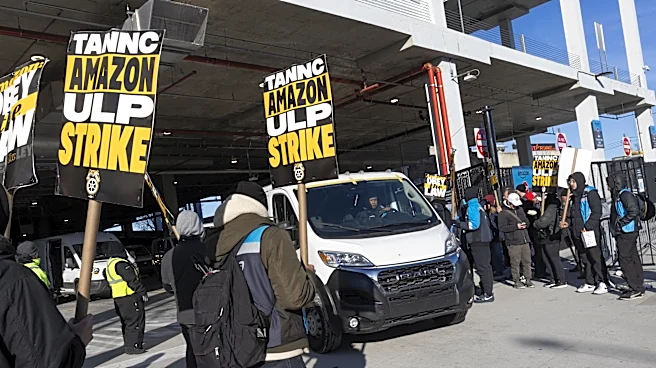
and corporate ownership. A software engineer named Joe challenged O'Leary, arguing that employees who contribute their time and skills should receive a larger share of company profits compared to investors who primarily provide capital. Joe questioned why profits generated by workers' efforts disproportionately benefit investors. O'Leary defended the role of investors, stating that capital is essential for businesses to develop, expand, and create opportunities, and that building wealth through investment involves significant effort and risk. The debate also touched upon specific companies like Starbucks and Amazon, with Joe highlighting disparities in wealth-building opportunities, such as stock units for software engineers versus warehouse employees. O'Leary countered that compensation is influenced by labor market conditions, suggesting that if companies struggle to attract workers, compensation will eventually improve. He also questioned the universal applicability of employee ownership across all industries.
Why It's Important?
This debate highlights a growing tension in the U.S. between traditional capitalist views on wealth distribution and a younger generation's desire for more equitable employee compensation and ownership. The discussion reflects broader societal concerns about financial inequality and the perceived fairness of corporate profit allocation. For U.S. businesses, this conversation underscores the increasing pressure from employees and the public to consider alternative compensation models, such as profit-sharing, dividends, or broader company ownership opportunities. The differing perspectives could influence future labor policies, corporate governance strategies, and employee retention efforts, particularly in industries where labor market conditions are tight. The Gen Z perspective, as articulated by Joe, suggests a potential shift in employee expectations, moving beyond just wages to a desire for a more direct stake in the companies they help build. This could lead to increased advocacy for worker-centric policies and a re-evaluation of how value is created and distributed within corporations.
What's Next?
The ongoing dialogue between figures like Kevin O'Leary and Gen Z representatives is likely to continue shaping public discourse around wealth, labor, and corporate responsibility in the U.S. This debate may encourage more companies to explore or expand employee equity programs, similar to examples like SpaceX, where thousands of employees are projected to become millionaires through stock performance. While O'Leary acknowledged no objection to employees becoming wealthy through ownership, the challenge remains in making such opportunities more common for a wider range of workers. Future discussions may focus on practical models for implementing broader employee ownership or profit-sharing schemes across various industries. Additionally, the conversation could influence policy discussions regarding worker rights, minimum wage, and corporate tax structures, as lawmakers respond to evolving public sentiment on economic fairness. The continued emphasis by O'Leary on personal finance advice, such as investing 15% of paychecks, will likely be met with ongoing scrutiny from younger generations facing significant cost-of-living challenges.
Beyond the Headlines
The debate between Kevin O'Leary and Gen Z delves into fundamental ethical and economic questions about who truly creates value in a company and how that value should be distributed. It touches upon the long-standing tension between capital and labor, questioning whether the current system adequately rewards all contributors. The Gen Z perspective, emphasizing employee ownership and profit-sharing, suggests a potential cultural shift towards a more stakeholder-centric view of capitalism, where the interests of employees are more closely aligned with those of shareholders. This could lead to long-term shifts in corporate culture, potentially fostering greater employee engagement and productivity if workers feel a more direct stake in the company's success. Conversely, it also highlights the challenges of balancing investor returns with broader employee benefits, especially in a competitive global economy. The discussion also implicitly raises questions about the role of individual financial responsibility versus systemic economic structures in achieving financial independence, particularly for younger generations facing unique economic pressures.