





What's Happening?
Interior designers are increasingly moving away from recessed lighting, which was once considered a hallmark of modern design, in favor of flush-mount and surface-mount ceiling lights. Recessed lighting, popular since the 1940s, is now often perceived
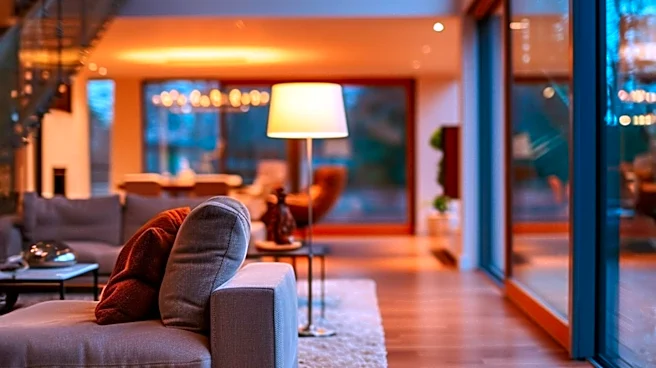
as outdated and impersonal in contemporary home aesthetics. Designers like Regan Baker and Sarah Jacoby note that current trends lean towards 'new traditionalism,' embracing eclecticism, texture, and more personalized spaces, where recessed lights struggle to integrate. Samantha Feuer of Norris Studio explains that while recessed lights can work with decorative elements, the common grid pattern across ceilings is falling out of favor. The shift reflects a broader desire for lighting fixtures that act as standalone features, contributing to the room's visual language and personality rather than being hidden.
Why It's Important?
This shift in interior design trends has significant implications for the home renovation and lighting industries. As designers influence consumer preferences, there will likely be an increased demand for flush-mount and surface-mount fixtures, potentially leading to a decline in sales for recessed lighting products. Homeowners looking to update their interiors to align with current styles may find themselves undertaking more complex electrical renovations, as swapping out recessed lights for flush mounts is not a simple DIY task. This could boost business for electricians and contractors specializing in lighting installation and drywall repair. The emphasis on 'new traditionalism' also suggests a broader cultural movement towards nostalgia and personalized aesthetics in home decor, moving away from the stark minimalism that dominated previous decades.
What's Next?
Homeowners considering updating their lighting will need to budget for professional electrical work, as the process often involves patching drywall, repainting, and reconfiguring wiring. Designers advise selecting new fixtures with backplates large enough to cover existing recessed light housing to ensure a cohesive look. For renters or those seeking less commitment, alternatives like lamps, wireless sconces, and plug-in wall mounts are suggested to enhance spaces without extensive remodeling. The trend is expected to continue, with manufacturers likely responding by offering a wider variety of aesthetically pleasing and versatile flush-mount and surface-mount lighting options to meet evolving consumer demands and design preferences.
Beyond the Headlines
The move away from recessed lighting highlights a deeper cultural shift in how people view their living spaces. It reflects a desire for homes to be more expressive, unique, and reflective of individual personality, rather than adhering to a uniform, minimalist ideal. This trend could foster greater creativity in lighting design, encouraging the development of fixtures that are both functional and artistic. It also underscores the cyclical nature of design trends, where older styles are reinterpreted and gain new relevance. The emphasis on professional installation for lighting changes also points to the increasing complexity of home systems and the value placed on skilled trades in achieving desired aesthetic and functional outcomes.