


What's Happening?
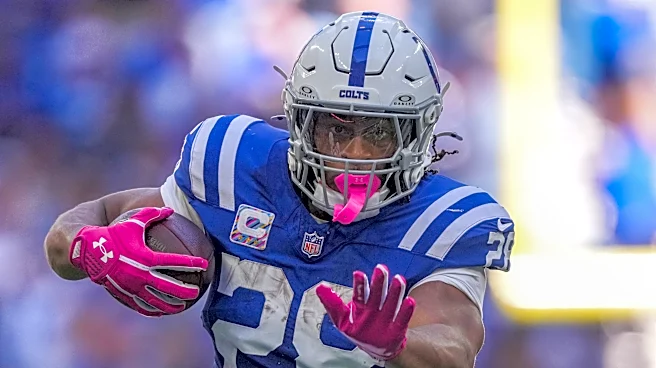
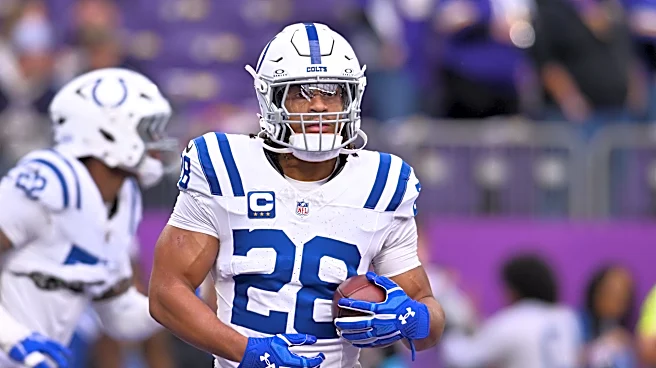
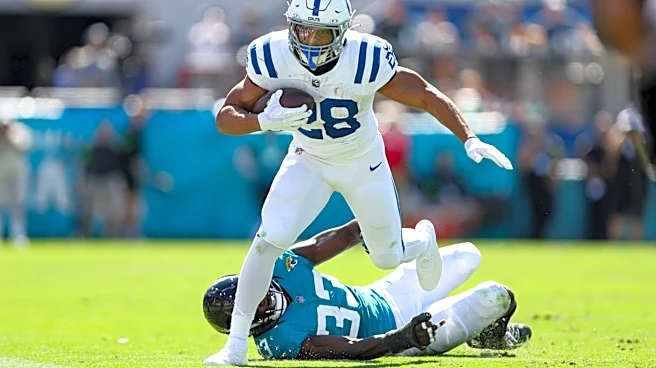
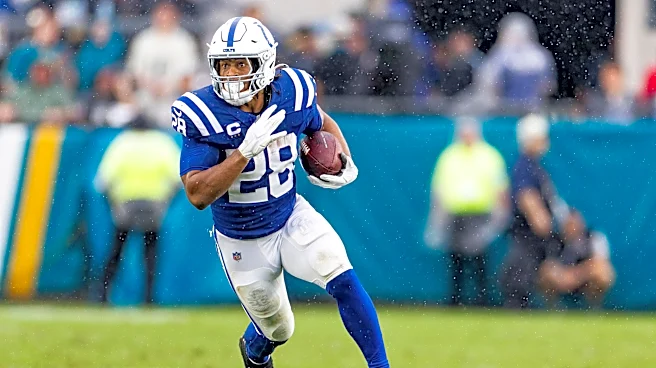
Former NFL defensive tackle Breiden Fehoko has publicly criticized Indianapolis Colts co-owner and CEO Carlie Irsay-Gordon for her handling of the Jonathan Taylor trade situation. Fehoko stated that "Every extra day Jonathan Taylor is an Indianapolis Colt is organization
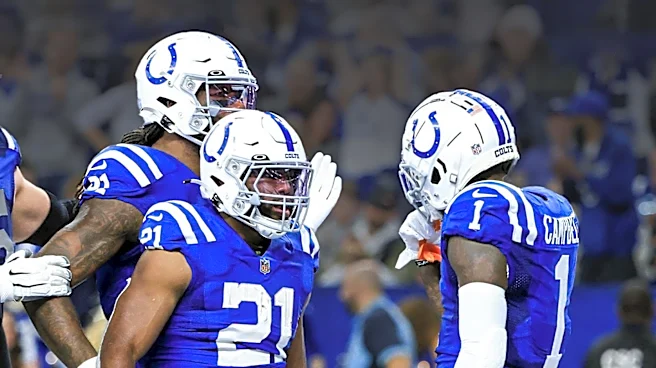
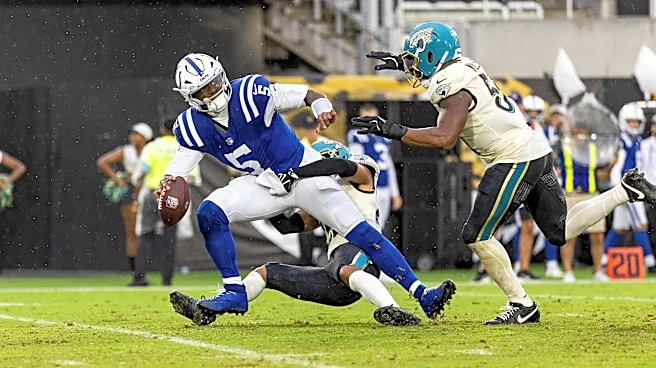
malpractice and a stain on the game of football," urging Irsay-Gordon to cease what he termed "theatrics." This criticism follows reports, including one from ESPN insider Adam Schefter on October 27, indicating that Irsay-Gordon initially did not want to trade Taylor. However, the public stance shifted four days later when Schefter and NFL Network's Ian Rapoport reported that the Colts were open to trading Taylor and were actively discussing with multiple teams. Fehoko's renewed criticism comes as the November 10 trade deadline approaches and the Colts are experiencing a difficult season, recently suffering a 42-7 loss to Jacksonville, bringing their record to 2-6.
Why It's Important?
This public criticism from a former NFL player highlights growing frustration within the football community regarding the protracted trade negotiations involving Jonathan Taylor. The situation underscores the complexities of player-team relations and the significant influence of ownership in critical roster decisions. For the Colts, the ongoing uncertainty surrounding Taylor, a key offensive weapon, could be a distraction affecting team morale and performance, especially as they struggle this season. The perceived indecision or high asking price for Taylor, reportedly a first-round pick and a defensive tackle, could also impact the team's reputation in future trade negotiations and player acquisitions. The outcome of this situation will be closely watched by other NFL teams and players, as it could set precedents for how star players' trade requests or contract disputes are managed by team ownership.
What's Next?
With the November 10 trade deadline rapidly approaching, the Indianapolis Colts face a critical decision regarding Jonathan Taylor. The team must either finalize a trade that meets their compensation demands or commit to keeping Taylor for the remainder of the season. If a trade does not materialize, the Colts will need to integrate Taylor fully back into their offensive scheme, potentially impacting team dynamics and play-calling. Conversely, if a trade occurs, the team will need to adjust to his absence and utilize the acquired assets to strengthen other areas of the roster. The reaction from fans, media, and potentially other players will be significant, regardless of the outcome. The team's performance in the coming weeks, particularly after the deadline, will also be a key indicator of how this situation has affected the organization.
Beyond the Headlines
The ongoing saga between Jonathan Taylor and the Indianapolis Colts, particularly the public criticism directed at co-owner Carlie Irsay-Gordon, delves into deeper issues of power dynamics within professional sports. It highlights the tension between player agency and ownership control, especially when a star player seeks a move or a new contract. The perception of ownership's handling of such situations can have long-term implications for a franchise's ability to attract and retain top talent. Furthermore, the public nature of Fehoko's criticism reflects a growing trend of former players using their platforms to hold team management accountable, influencing public opinion and potentially putting pressure on decision-makers. This situation also touches upon the emotional and financial investments involved, as teams balance their attachment to star players with strategic roster management and financial prudence.