







What's Happening?
Rohan Kulkarni, a software engineer at Meta, is actively engaging with artificial intelligence (AI) beyond his work hours to stay ahead in the rapidly evolving tech industry. Kulkarni, who moved to the U.S. in 2021 and joined Meta in 2022, dedicates four
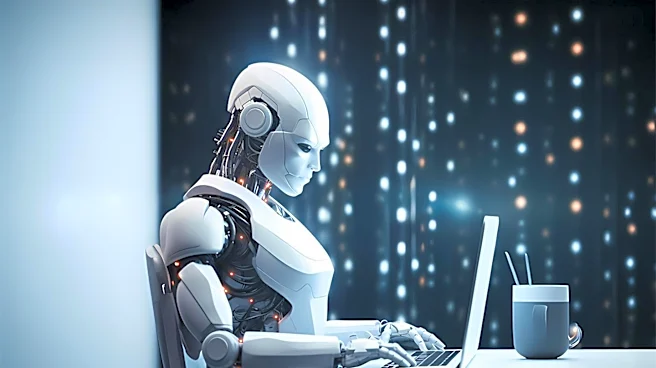
to six hours weekly to learning about AI advancements, including experimenting with tools like ChatGPT, Claude, and Perplexity. This personal investment reflects a broader trend among tech workers who are adapting to AI's growing influence on their careers. Kulkarni emphasizes the importance of using AI as a 'thinking partner' rather than a replacement for human creativity and problem-solving. His approach involves developing ideas independently and using AI to refine and test these concepts, a strategy that has helped him advance from a new graduate to a senior software engineer at Meta.
Why It's Important?
The integration of AI into daily workflows is reshaping the tech industry, prompting professionals like Kulkarni to adapt their skills and mindsets. This shift is crucial as AI tools increasingly assist in brainstorming and prototyping, reducing project timelines significantly. For tech workers, staying updated with AI developments is not just about career advancement but also about maintaining relevance in a competitive job market. Kulkarni's experience highlights the dual role of AI as both a tool for efficiency and a catalyst for a new way of thinking, which could redefine job roles and expectations in the tech sector. As AI continues to evolve, professionals who can effectively leverage these technologies are likely to have a competitive edge.
What's Next?
As AI becomes more integrated into the tech industry, professionals may need to continuously update their skills to keep pace with technological advancements. Companies might also need to provide more training and resources to help employees adapt to these changes. The ongoing development of AI tools could lead to further shifts in job roles, requiring workers to balance technical proficiency with creative problem-solving. Additionally, the industry may see increased collaboration between humans and AI, necessitating a reevaluation of traditional workflows and career paths.
Beyond the Headlines
The rise of AI in the workplace raises ethical and cultural questions about the future of work. As AI tools become more prevalent, there is a risk of over-reliance, which could stifle creativity and innovation. Moreover, the shift towards AI-driven processes may lead to job displacement, necessitating discussions about workforce retraining and the role of AI in society. The cultural shift towards viewing AI as a 'thinking partner' rather than a mere tool could influence how future generations approach problem-solving and innovation.