








What's Happening?
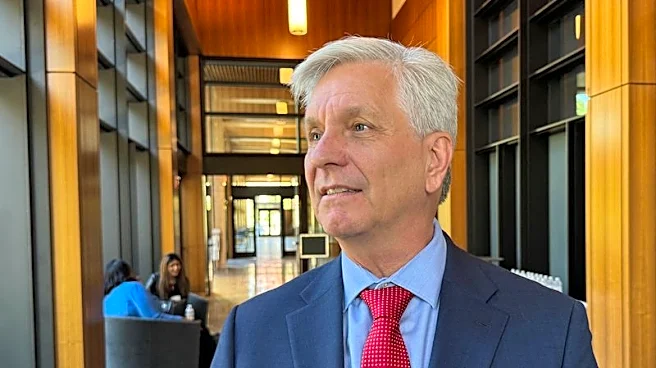
The International Monetary Fund (IMF) is seeking to engage with central banks regarding changes in their use of forward guidance on monetary policy. Petya Koeva Brooks, deputy director of the IMF's research department, emphasized the importance of communication
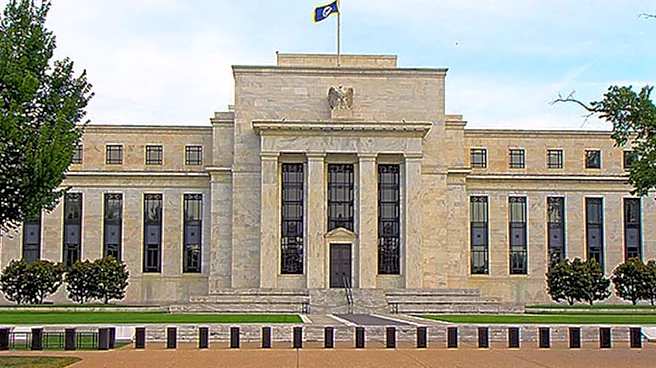
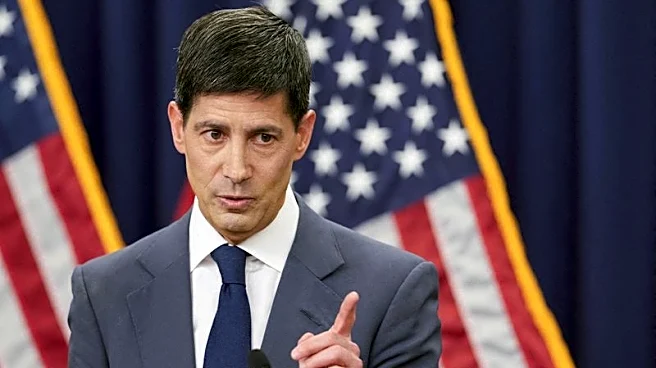
in uncertain times. The IMF recognizes that forward guidance has been a valuable tool in the past, but acknowledges that policymakers may need to revisit its scope and modalities over time. New Federal Reserve Chairman Kevin Warsh has announced plans to review the Fed's communication policy, aiming to reduce forward guidance on monetary policy. In his first policy meeting as chair, Warsh led a consensus to simplify the policy statement by removing references to potential near-term rate actions. This move aligns with sentiments expressed by other central bank leaders, including European Central Bank President Christine Lagarde and Bank of England Governor Andrew Bailey, who have also shown reservations about forward guidance.
Why It's Important?
The IMF's engagement with central banks on forward guidance is significant as it reflects a shift in how monetary policy is communicated in an increasingly volatile economic environment. Forward guidance has traditionally helped manage market expectations by providing insights into future policy actions. However, as economic conditions become more unpredictable, rigid guidance may limit central banks' flexibility to respond to unforeseen developments. The Fed's move to simplify its communication could influence other central banks to adopt similar strategies, potentially leading to a broader reevaluation of how monetary policy is conveyed globally. This shift could impact financial markets, as investors adjust to less predictable policy signals, and may affect economic stakeholders who rely on central bank guidance for planning and decision-making.
What's Next?
The IMF plans to continue discussions with central banks in the coming months to explore the future of forward guidance. As central banks reassess their communication strategies, stakeholders will be closely monitoring any changes to understand their implications for monetary policy and market stability. The Fed's approach under Chairman Warsh may set a precedent for other central banks, prompting a reevaluation of how policy intentions are communicated. This could lead to a period of adjustment for financial markets as they adapt to potentially less transparent guidance. The outcome of these discussions may influence future policy decisions and the overall approach to central bank communications in a rapidly changing economic landscape.