







What's Happening?
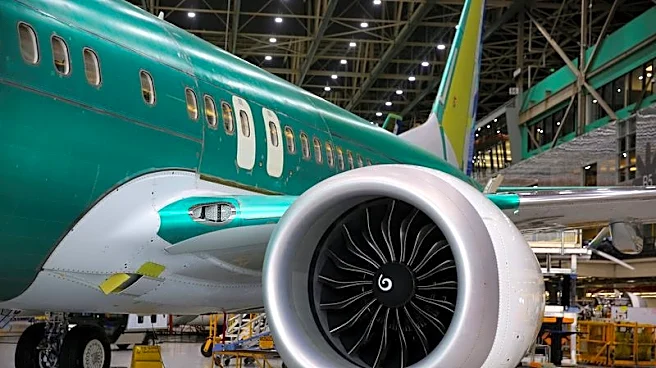
GE Aerospace has announced that CFM International has received approval from the Federal Aviation Administration (FAA) for its Leap-1B upgrade package. This development was confirmed by GE Aerospace CEO Larry Culp during the company's second-quarter earnings
call. The approval allows for the installation of new parts during shop visits and on new-production engines in the coming months. The Leap-1B durability kit addresses wear issues, particularly in hot and harsh operating environments, by including new turbine blades, nozzles, and forward inner nozzle supports. A similar kit for the Leap-1A was approved in late 2024 and is now installed on over 30% of the CFM-powered Airbus A320neo-family fleet. The retrofit of the fleet is expected to be a multi-year effort, with full retrofitting anticipated by the early 2030s.
Why It's Important?
The FAA's approval of the Leap-1B durability kit is significant for the aviation industry as it aims to enhance the longevity and performance of aircraft engines. This development is crucial for airlines operating in challenging environments, as it addresses specific wear issues that can affect engine reliability and efficiency. The durability improvements are part of a broader program by CFM partners Safran and GE Aerospace to tackle multiple engine issues, including fuel nozzle coking and electronic engine control software changes. The successful implementation of these upgrades could lead to reduced maintenance costs and improved operational efficiency for airlines, potentially influencing fleet management strategies and aircraft lifecycle planning.
What's Next?
With the FAA approval in place, GE Aerospace and CFM International will focus on the industrialization plan for the Leap-1B durability kit. The installation of the kit will begin during scheduled shop visits and on new-production engines, with a full cut-over expected by 2027. The retrofit process will continue over several years, with the goal of having both the Leap-1A and Leap-1B fleets fully retrofitted by the early 2030s. Airlines and maintenance providers will likely monitor the implementation closely to assess the impact on engine performance and maintenance schedules.