


What's Happening?
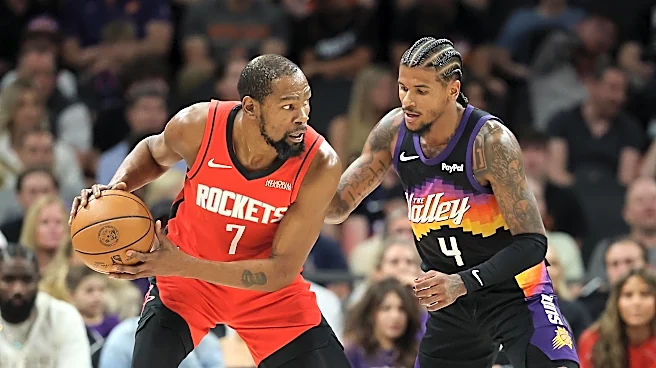
Phoenix Suns Head Coach Jordan Ott provided a four-word response to the recent social media exchange involving Kevin Durant, Suns owner Mat Ishbia, and Dillon Brooks. When asked about the situation before a game against the Houston Rockets, Ott jokingly
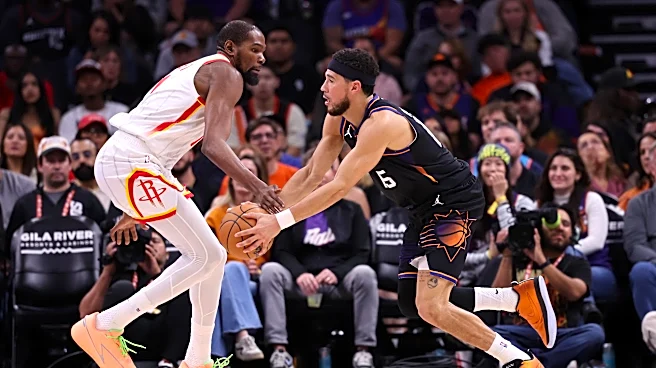
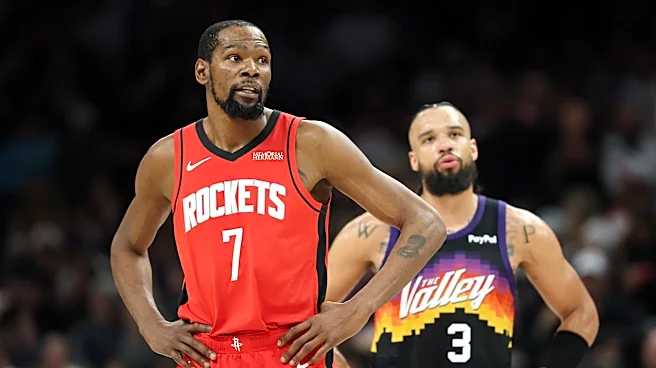
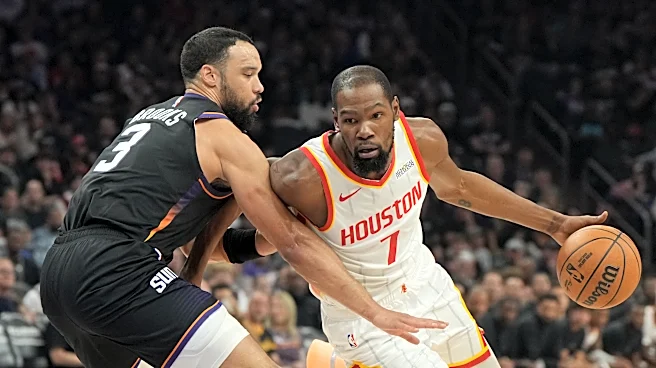
stated, "Don't use social media." He elaborated that during the season, the focus remains on the game and daily challenges, emphasizing the need to settle into a routine and process. The social media saga began with Ishbia making comments about Durant's tenure with the Suns, to which Durant responded by claiming he brought the team's current culture. Dillon Brooks then joined the conversation, thanking Ishbia for trading Durant. Despite the team owner's involvement in the public back-and-forth, Ott downplayed its potential as a distraction, focusing instead on the team's performance and development. The Suns went on to defeat the Rockets 102-99.
Why It's Important?
This incident highlights the increasing intersection of professional sports, social media, and team dynamics. While Head Coach Jordan Ott attempted to defuse the situation, the public exchange between a team owner and star players, past and present, can create an environment of scrutiny and potential internal friction. For the Phoenix Suns, managing such external narratives is crucial, especially as they navigate the early stages of the season and strive for team cohesion. The comments from Mat Ishbia, a majority team owner, carry significant weight and could be perceived differently by players and fans. The involvement of Dillon Brooks, a player known for his outspoken nature, further amplified the public discourse. This situation underscores the challenges sports organizations face in controlling narratives in the digital age, where player and owner comments can quickly become viral and impact team morale and public perception.
What's Next?
The Phoenix Suns will continue their season, with Head Coach Jordan Ott and the team aiming to maintain focus on their on-court performance. While Ott has publicly dismissed the social media saga as a distraction, the underlying tensions or perceptions created by the exchange between Kevin Durant, Mat Ishbia, and Dillon Brooks may linger. Future interactions between these individuals, particularly during games involving the Rockets, could draw renewed media attention. The team's ability to navigate these external pressures while developing a cohesive unit will be a key factor in their success. The incident also serves as a reminder for sports organizations to consider strategies for managing public relations and social media engagement involving high-profile figures within their franchises.
Beyond the Headlines
The social media exchange involving a team owner and players touches upon broader themes of athlete-owner relationships and the evolving landscape of sports communication. In an era where athletes and owners frequently use social media to express opinions, the lines between personal and professional commentary can blur. This incident could prompt discussions within sports leagues about guidelines for public statements by team personnel, particularly those that might be perceived as critical or divisive. It also highlights the power of social media to shape narratives and influence fan engagement, for better or worse. The ability of a coach to downplay such a public spat, while perhaps necessary for team focus, doesn't erase the potential long-term implications for team culture and player perceptions of management.