


What's Happening?
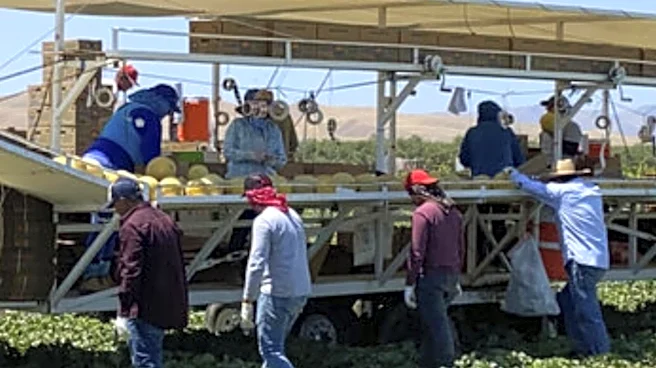
The U.S. vegetable industry is experiencing significant shifts due to rising labor costs, which are influencing decisions on crop planting, technology investments, and operational strategies. According to Bret Erickson, Senior Vice President of Business
Affairs for Little Bear Produce in Texas, the company relies heavily on H-2A workers, which has resolved labor availability issues but increased the need for efficiency. The 2026 State of the Vegetable Industry survey highlights that growers facing labor challenges are more likely to operate larger farms and adopt new technologies. These growers are focusing on efficiency by consolidating production and investing in farm management software, GPS systems, and precision application technology. The survey suggests that labor pressures are prompting a broader examination of operational complexity and efficiency in the industry.
Why It's Important?
The rising labor costs in the vegetable industry have broader implications for U.S. agriculture, affecting not only workforce management but also technological adoption and operational strategies. Larger farms and those serving commercial customers face increased pressure to meet delivery schedules and quality expectations, driving them to adopt efficiency-enhancing technologies. This shift could lead to a more technologically advanced agricultural sector, potentially increasing productivity and reducing costs in the long term. However, it also highlights the challenges smaller farms may face in keeping up with these changes, potentially widening the gap between large and small agricultural operations.