






What's Happening?
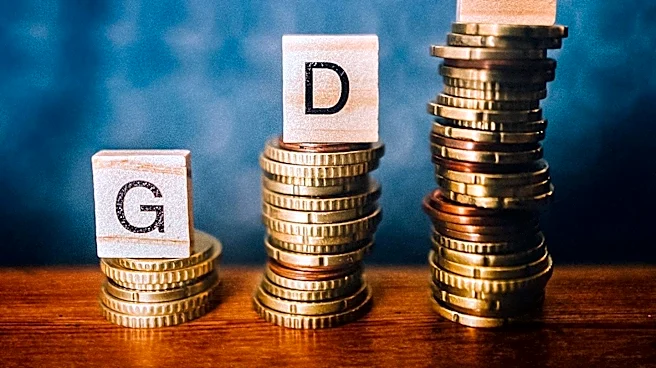
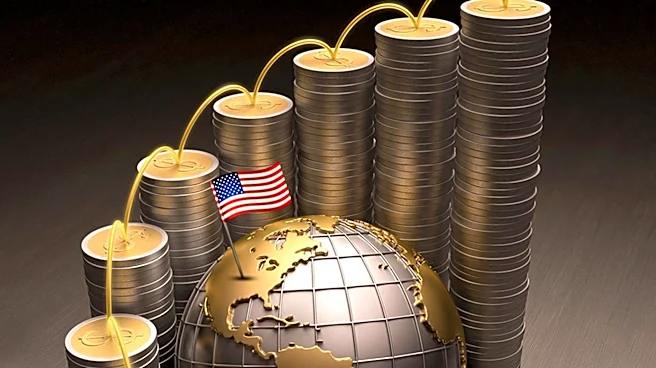
The U.S. economy experienced a stronger-than-expected growth in the first quarter of 2026, with the gross domestic product (GDP) increasing at an annualized rate of 2.1%, according to the Commerce Department's Bureau of Economic Analysis. This marks an upward
revision from the previously reported 1.6% growth rate. The revision was largely due to a decrease in imports, particularly consumer and capital goods, which contributed positively to the GDP. However, consumer spending, which constitutes a significant portion of the economy, nearly stalled, growing at a mere 0.5% rate, down from the previously reported 1.4%. This slowdown in consumer spending was attributed to reduced outlays on services such as financial services and international travel, partly due to a stock market downturn. Despite this, business investment, particularly in artificial intelligence-related equipment, showed robust growth.
Why It's Important?
The revised GDP figures highlight the complex dynamics of the U.S. economy, where strong business investments are counterbalanced by weak consumer spending. The growth in business investment, especially in artificial intelligence, suggests a shift towards a more technology-driven economy. However, the stagnation in consumer spending raises concerns about the sustainability of economic growth, as consumer expenditure is a major driver of the U.S. economy. The data also reflects the broader economic impact of geopolitical tensions, such as the U.S.-led conflict with Iran, which has influenced fuel prices and consumer confidence. The mixed economic signals could influence future monetary policy decisions by the Federal Reserve, particularly regarding interest rates.
What's Next?
Looking ahead, the U.S. economy may continue to face challenges if consumer spending does not recover. The ongoing geopolitical tensions and their impact on fuel prices could further strain consumer budgets. However, the strong performance in business investments, particularly in technology sectors, could provide a buffer against these challenges. Policymakers and economists will likely monitor these trends closely to assess the need for potential fiscal or monetary interventions to sustain economic growth.