





What's Happening?
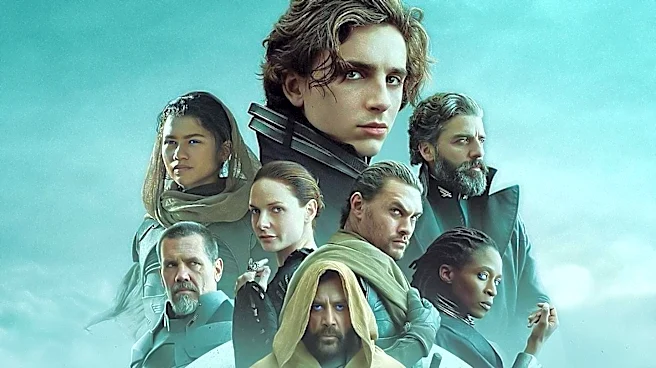
Dune: Part Three is scheduled for release on December 18, 2026, and will introduce notable timeline changes compared to Frank Herbert's original novels. According to one source, the film is expected to begin 19 years after the conclusion of Dune: Part One.
This chronological shift is a departure from the books, where events between the first and second novels occur off-screen. The altered timeline in the film adaptation could allow characters like Alia to appear as a young adult and potentially mean that Paul and Chani's children, Leto II and Ghanima, are already born at the start of the film, rather than being born at the end of 'Dune Messiah,' which 'Dune: Part Three' is adapting. The previous film, 'Dune: Part Two,' condensed the timeline of the first book, resulting in Alia still being a fetus, and Paul, rather than Alia, slaying Baron Harkonnen.
Why It's Important?
The decision to significantly alter the timeline in 'Dune: Part Three' carries substantial implications for the narrative and character development, potentially reshaping audience expectations and the franchise's future direction. By setting the film nearly two decades after 'Dune: Part One,' the filmmakers are creating a distinct cinematic universe that diverges from the established literary canon. This could lead to a fresh interpretation of beloved characters and storylines, potentially attracting new viewers while challenging the perceptions of long-time fans. The shift also provides creative freedom for the adaptation, allowing for new plot points and character arcs that might not have been possible under a strict adherence to the books. This approach could influence how other complex literary works are adapted for the screen, demonstrating a willingness to prioritize cinematic storytelling over strict fidelity to source material.
What's Next?
The upcoming release of 'Dune: Part Three' in December 2026 will reveal the full extent of these timeline changes and their impact on the story. Audiences and critics will closely scrutinize how these alterations affect the narrative coherence and character development, particularly concerning Paul Atreides's journey and the fates of characters like Chani and Alia. The film's success or reception could influence future adaptations of complex literary works, potentially encouraging more creative liberties in translating books to the screen. Furthermore, the altered timeline might set the stage for subsequent films in the 'Dune' universe, establishing a unique cinematic continuity that stands apart from the novels. The filmmakers' choices will likely spark extensive discussion among fans and literary scholars regarding the balance between adaptation and artistic interpretation.
Beyond the Headlines
The timeline changes in 'Dune: Part Three' highlight a broader trend in adapting complex literary works for the screen: the tension between fidelity to the source material and the demands of cinematic storytelling. By diverging from Frank Herbert's original chronology, the filmmakers are engaging in a form of narrative reinterpretation, potentially exploring one of the 'branching timelines' that Paul Atreides himself envisions in the books. This approach raises questions about authorship and interpretation, as the film becomes a distinct artistic entity rather than a direct translation. It also underscores the challenge of condensing vast, intricate narratives into a digestible cinematic format, often requiring difficult choices that prioritize pacing, character arcs, and visual impact. The creative liberties taken could set a precedent for future adaptations, encouraging a more interpretive approach to beloved franchises.