





What's Happening?
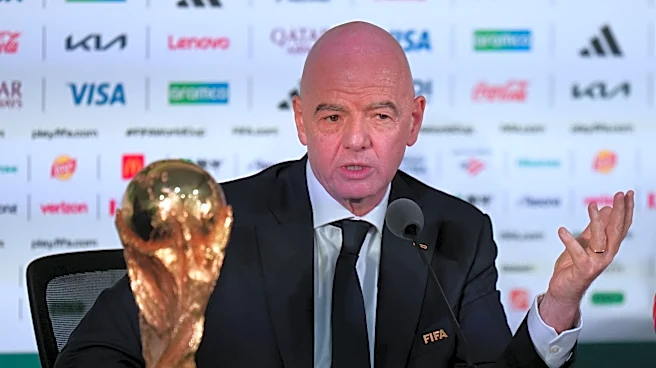
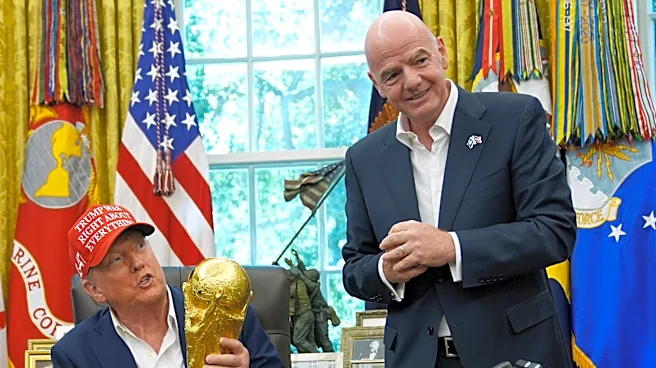
Carlos Cordeiro, a senior adviser to FIFA and a member of the White House Task Force for the World Cup, has resigned in protest against FIFA President Gianni Infantino's plan to sell a stake in the World Cup to private investors. Cordeiro, a former Goldman
Sachs banker, criticized the plan as unnecessary given FIFA's financial resources and reserves. He urged other FIFA staff to oppose the proposal, which involves creating a $20 billion subsidiary with 20% owned by private investors. The plan has faced significant backlash, with UEFA and other associations threatening to boycott FIFA competitions.
Why It's Important?
Cordeiro's resignation and the widespread opposition to the FFE proposal highlight the growing tension within FIFA over its commercial strategies. The plan to involve private investors in the World Cup's commercial operations raises concerns about the potential loss of control over one of football's most valuable assets. The backlash from UEFA and other associations underscores the importance of maintaining the integrity and independence of football's governing bodies. The situation also reflects broader concerns about the influence of private equity in sports and the potential impact on the governance and future of football.
What's Next?
The proposal will require approval from FIFA's 211 member associations, and the outcome of this process will be crucial in determining the future direction of FIFA's commercial operations. The response from major stakeholders, including UEFA and other regional football associations, will play a significant role in shaping the proposal's fate. The situation also raises questions about the future leadership of FIFA, as President Gianni Infantino faces increasing scrutiny and potential challenges to his presidency. The ongoing debate over the FFE proposal could have long-term implications for the governance and commercial strategies of major sports organizations.