






What's Happening?
Artificial intelligence (AI) and advanced technology are significantly transforming the marketing and operational strategies for California walnuts and other specialty crops. Michael Jameson, director of sales at Morada Nut Company, notes that the competition
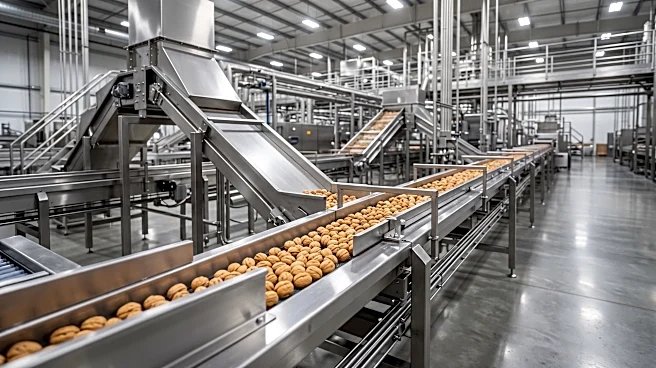
for produce department shelf space has intensified dramatically over the past 40 years, with retailers now carrying around 500 items compared to 100 previously. This increased competition makes consistency, quality, service, and pricing crucial for suppliers. Jameson anticipates that AI will make this competition even tougher by enabling more precise inventory management. AI could analyze factors such as weather, holidays, traffic, store placement, and sales per square foot to determine exact product needs, reducing the need for retailers to order extra inventory. Furthermore, AI-powered cameras and other technologies are expected to monitor inventory, product condition, and pricing in real time. Morada Nut Company has already integrated AI into one of its cherry packing lines, providing early insights into its potential impact on production and marketing decisions. Social media is also being leveraged for targeted promotions, alerting consumers to product availability near retailers. Despite these technological advancements, Jameson emphasizes the importance of combining new technology with traditional customer relationships, which historically played a vital role in understanding markets and navigating difficult seasons.
Why It's Important?
The integration of AI and advanced technology into California's agricultural sector, particularly for specialty crops like walnuts, holds significant implications for the industry's future. This shift can lead to increased efficiency in supply chain management, reduced waste through optimized inventory, and more effective marketing strategies that directly target consumers. For growers and suppliers, adopting these technologies can enhance competitiveness by improving product quality, consistency, and pricing, which are critical for securing valuable retail shelf space. However, it also presents challenges, as smaller operations may struggle to invest in and adapt to these new technological demands, potentially widening the gap between large and small-scale producers. The reliance on AI for inventory and sales forecasting could also reduce the human element in buyer-seller relationships, which historically provided valuable market insights and flexibility. Ultimately, the successful adoption of AI will determine which companies thrive in an increasingly competitive and technologically driven agricultural market, impacting the economic landscape of California's specialty crop industry.
What's Next?
The agricultural industry in California is expected to continue its rapid adoption of AI and other advanced technologies. Companies like Morada Nut Company will likely expand their use of AI in various stages of production and distribution, from packing lines to inventory management and consumer outreach. Further development of AI-powered tools for predictive analytics, real-time monitoring, and targeted marketing will be a key focus. The industry will also need to address the balance between technological efficiency and the maintenance of traditional business relationships, as emphasized by Michael Jameson. Training and education for agricultural workers and management will become increasingly important to effectively utilize these new tools. Additionally, as technology becomes more central, discussions around data privacy, cybersecurity, and the ethical implications of AI in agriculture may gain prominence. The success of these technological integrations will likely influence investment patterns in agricultural technology and shape the competitive landscape for California's specialty crop producers in the coming years.
Beyond the Headlines
The embrace of AI in California's walnut industry reflects a broader trend of technological disruption across various sectors, raising deeper questions about the future of work and the nature of business relationships. The shift from traditional, relationship-based sales to data-driven, AI-optimized processes could lead to a more impersonal marketplace, potentially eroding the trust and flexibility that personal connections once provided. This transformation also highlights the growing digital divide within agriculture, where access to capital and technological expertise will increasingly determine success. Ethical considerations regarding data ownership, algorithmic bias in forecasting, and the potential for job displacement due to automation will become more pressing. Furthermore, the ability of AI to precisely predict demand could lead to a more efficient but potentially less resilient food system, as it might reduce buffer inventories and increase reliance on just-in-time delivery. The long-term impact could reshape not only how food is produced and marketed but also the very structure of agricultural communities and the skills required for future generations of farmers and agribusiness professionals.