






What's Happening?
Samsung Electronics has been actively supporting domestic Small and Medium-sized Enterprises (SMEs) in establishing Smart Factories since 2015. This initiative, which is independent of direct business ties, aims to help SMEs adopt advanced manufacturing
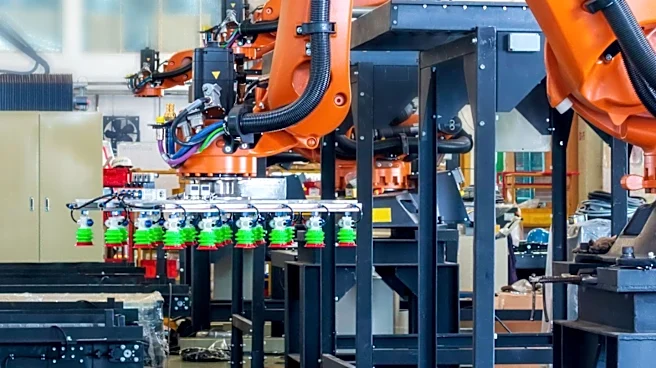
systems that collect and analyze data through information and communications technology. The goal is to enable production at the lowest cost and shortest time. Lee Gwang-ryeol, head of Samsung Electronics' ESG & Smart Factory Support Center, emphasized that 'data' and 'systems' are crucial for a successful Smart Factory, moving away from intuition-based work to data-driven, standardized processes. The program, which has supported over 3,600 SMEs by last year, involves 160 expert committee members with over 20 years of manufacturing innovation experience. Samsung Electronics contributes 10 billion won annually, matched by government funding, to this program. The scope of support is expanding to include manufacturing AI, covering systems like Manufacturing Execution Systems (MES), Enterprise Resource Planning (ERP), Supply Chain Management (SCM), Product Lifecycle Management (PLM), and automation with robots and Automated Guided Vehicles (AGV).
Why It's Important?
This initiative is significant for the U.S. manufacturing sector as it demonstrates a successful model for fostering innovation and competitiveness among SMEs through technological adoption. By enabling smaller businesses to implement Smart Factory solutions and AI, it addresses common challenges such as high initial investment costs and a shortage of specialized personnel. The program's focus on improving productivity, reducing defect rates, and enhancing on-time delivery directly impacts the efficiency and quality of goods produced, which can have ripple effects on global supply chains and trade. For U.S. companies, particularly those in manufacturing, this model highlights the benefits of public-private partnerships and expert-led support in driving industrial modernization. It also underscores the growing importance of AI in manufacturing, pushing industries towards more data-driven and automated processes to remain competitive in a rapidly evolving global market.
What's Next?
The Smart Factory support program is set to evolve into 'Smart Factory 4.0' starting this year, with Samsung Electronics planning to establish and expand manufacturing AI support through 2028. The company intends to focus on supporting 'K industries' such as food, beauty, parts, and equipment, applying AI incrementally to core processes that offer the greatest impact, like production bottlenecks. This phased approach is designed to mitigate the high initial investment costs and personnel shortages often faced by SMEs. Expert committee members will continue to provide on-site support to SMEs for six to ten weeks, focusing on improving quality, productivity, and logistics. The continued expansion of AI integration and customized support is expected to further enhance the competitiveness and efficiency of participating SMEs, potentially setting a benchmark for similar initiatives in other countries, including the U.S.
Beyond the Headlines
The deeper implication of Samsung's Smart Factory initiative lies in its potential to democratize advanced manufacturing technologies. By making AI and Smart Factory solutions accessible to SMEs, the program helps bridge the technological gap between large corporations and smaller businesses. This fosters a more resilient and innovative industrial ecosystem, where smaller players can contribute to and benefit from the advancements of Industry 4.0. Ethically, it promotes a more equitable distribution of technological progress, preventing a scenario where only large enterprises can afford and implement cutting-edge solutions. Culturally, it encourages a shift from traditional, experience-based manufacturing to a data-driven, system-oriented approach, necessitating new skill sets and a continuous learning environment for the workforce. This long-term shift could redefine manufacturing practices globally, emphasizing adaptability and technological integration as key drivers of success.