







What's Happening?
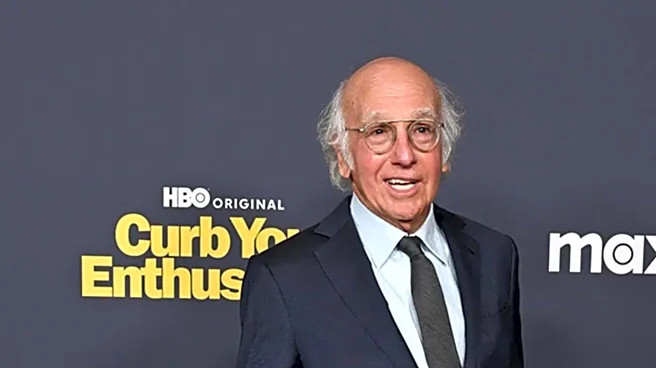
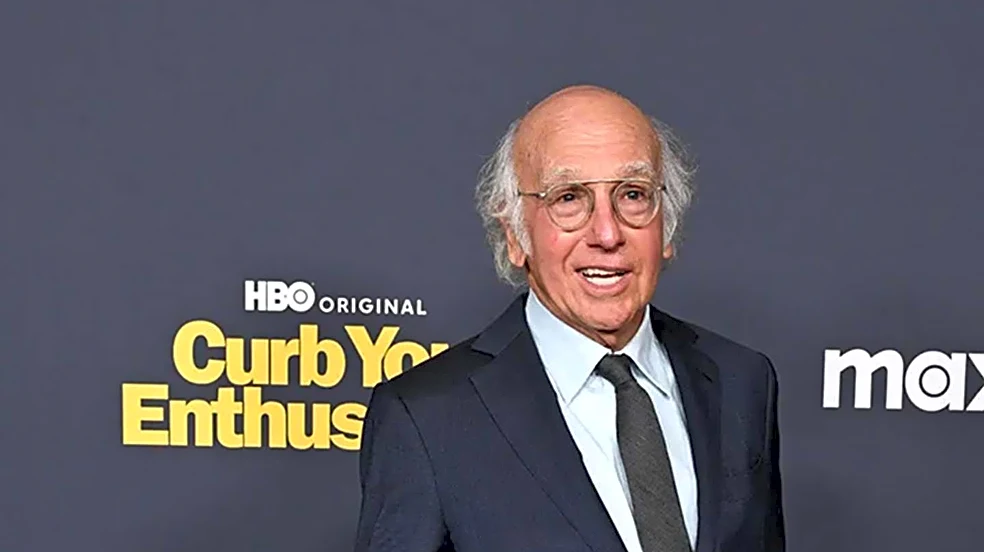
Larry David, the acclaimed comedian, actor, and writer, actively sought to avoid being depicted as 'nice' in his recently released biography, 'Emperor of Nothing: The Making of Larry David.' According to author Blake J Harris, David expressed a strong
aversion to any content that might portray him in a sweet or endearing light. Harris recounted an instance where David crossed out a quote from actress Mary Steenburgen, who described him as a 'sweetheart,' with the note 'Too nice, embarrassing!' David's primary concern, as stated by Harris, was to be perceived as funny, even at the expense of revealing his more human or paternal side. The biography, which took six years to complete, involved weekly video calls between David and Harris over six months during the COVID-19 pandemic. Despite his initial reluctance and eventual regret about agreeing to the book, David's insistence on maintaining his cynical persona shaped aspects of the narrative.
Why It's Important?
This revelation offers a unique insight into the public and private persona of a significant figure in American comedy. Larry David's deliberate effort to curate his image, even in a biographical context, highlights the complex relationship between public figures and their narratives. For fans and critics, it reinforces the authenticity of his 'curmudgeonly' brand, which has been central to the success of shows like 'Seinfeld' and 'Curb Your Enthusiasm.' This approach to biography challenges traditional expectations of revealing a subject's full character, instead emphasizing the artist's control over their legacy. It also underscores the commercial value of a consistent public image in the entertainment industry, where an established persona can be as important as the work itself. The author's decision to include some of the 'sweeter' aspects, despite David's objections, suggests a tension between biographical integrity and subject preference.
What's Next?
The release of 'Emperor of Nothing: The Making of Larry David' will likely spark further discussion and analysis of Larry David's career and personal life. Readers and critics will now have the added context of his active involvement in shaping his biographical narrative, potentially leading to new interpretations of his work and public appearances. The book's reception may also influence how other public figures approach their own biographies, potentially encouraging more direct involvement in controlling their stories. For David himself, the biography's publication marks a significant moment in his public life, offering a comprehensive look at his journey, albeit one he initially regretted. Future interviews or public statements from David or Harris might shed more light on the specific content that was debated and ultimately included or excluded.
Beyond the Headlines
The dynamic between Larry David and his biographer raises broader questions about authenticity, control, and the construction of identity in public life. David's desire to avoid being seen as 'nice' can be interpreted as a strategic move to protect his comedic brand, which thrives on cynicism and social awkwardness. This highlights a societal paradox where vulnerability and genuine emotion can sometimes be perceived as weaknesses, especially in entertainment. The incident also touches upon the ethical considerations in biographical writing: to what extent should a biographer adhere to the subject's wishes, particularly when those wishes conflict with a more comprehensive or nuanced portrayal? This case exemplifies the ongoing negotiation between a public figure's self-perception and the biographer's pursuit of a complete and truthful narrative, ultimately shaping how audiences understand and relate to cultural icons.