




What's Happening?
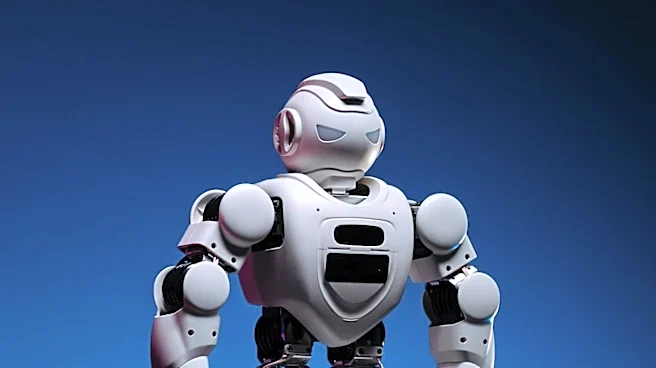
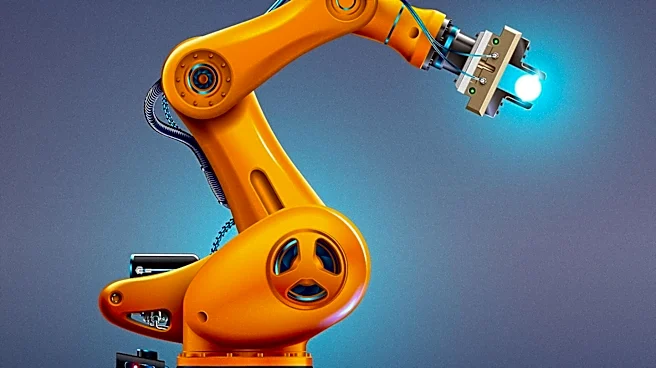
Hyundai Motor Group has announced its strategic vision for Physical AI at the San Francisco AI Summit, led by Executive Chair Euisun Chung. The company plans to establish a robot production facility in the U.S. by 2028, with an annual capacity of up to 30,000
units. This facility will initially deploy the Atlas humanoid robot in production environments. Hyundai is collaborating with global tech leaders, including Boston Dynamics and Google DeepMind, to enhance AI capabilities in robotics. The company aims to integrate AI into manufacturing, logistics, and mobility, creating a data flywheel system to continuously improve AI models. This initiative is part of Hyundai's broader strategy to transition from traditional automotive manufacturing to a Physical AI solution company.
Why It's Important?
Hyundai's move into Physical AI represents a significant shift in the automotive and robotics industries, potentially setting new standards for AI integration in manufacturing and urban infrastructure. The establishment of a U.S. production facility underscores the importance of the American market in Hyundai's global strategy. By leveraging partnerships with tech giants like Google DeepMind, Hyundai aims to enhance the autonomy and adaptability of its robots, which could lead to advancements in various sectors, including manufacturing and logistics. This development could also stimulate job creation and technological innovation in the U.S., contributing to the growth of the AI and robotics ecosystem.
What's Next?
Hyundai plans to continue its collaboration with global technology leaders to advance its Physical AI capabilities. The company is expected to focus on refining its AI models and expanding the deployment of its humanoid robots across different sectors. The establishment of the U.S. production facility is a key step in this process, with broader deployment anticipated following phased validation. Hyundai's ongoing investments in AI and robotics are likely to influence future developments in smart manufacturing and urban infrastructure, potentially leading to more integrated and efficient systems.
Beyond the Headlines
The integration of AI into urban infrastructure, as envisioned by Hyundai, could lead to significant changes in how cities operate, with potential improvements in efficiency and sustainability. The focus on creating a data flywheel system highlights the importance of continuous learning and adaptation in AI models, which could drive future innovations in the field. Additionally, Hyundai's commitment to fostering an open ecosystem for robotics and AI innovation may encourage collaboration and knowledge sharing, further accelerating advancements in these areas.