



What's Happening?
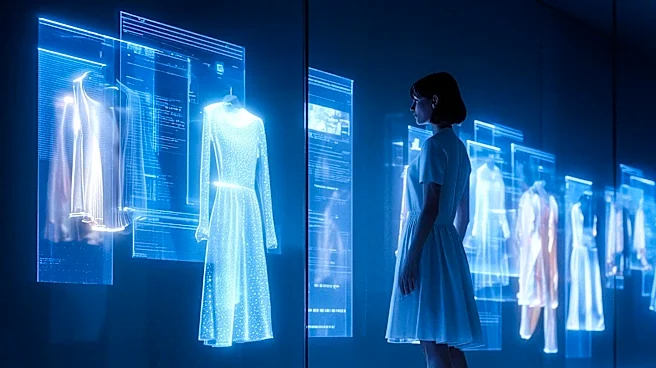
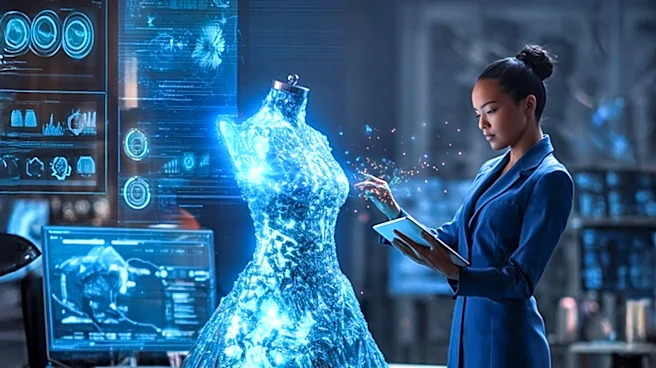
The fashion industry is increasingly exploring the integration of Artificial Intelligence (AI) into its content production workflows. Brands are utilizing AI for generating product imagery, creating virtual models, and developing campaign visuals. This
shift is driven by AI's ability to offer greater flexibility in content production and unlock creative possibilities that were previously cost-prohibitive or technically challenging. AI allows for the efficient exploration of diverse creative directions, the development of content variations tailored for different audiences, and the visualization of concepts that would typically require extensive physical sets or locations. However, experts caution that while AI simplifies image production, it does not inherently lead to great campaigns. The successful implementation of AI in fashion requires strong creative direction, an understanding of visual storytelling, and a comprehensive production process that encompasses casting, styling, and composition to ensure brand authenticity. The technology itself is only one component; the creative decisions behind its use ultimately determine the quality of the final output.
Why It's Important?
The integration of AI in fashion content production holds significant implications for the industry's operational efficiency and creative output. For U.S. fashion brands, adopting AI can lead to substantial cost savings in production, faster content generation, and the ability to experiment with a wider range of visual concepts. This could democratize content creation, allowing smaller brands to produce high-quality visuals that were once exclusive to larger enterprises with bigger budgets. However, there's a critical need to balance technological adoption with the preservation of human creativity and brand identity. Over-reliance on AI without a strong creative vision risks producing generic or uninspired content, potentially diluting brand uniqueness. The industry must invest in creative skills alongside technical knowledge to effectively leverage AI, ensuring that the technology serves as a tool to enhance, rather than replace, the artistic and storytelling aspects of fashion. Brands that successfully integrate AI while maintaining their creative integrity stand to gain a competitive advantage in a rapidly evolving market.
What's Next?
Looking ahead, the fashion industry is expected to further refine its approach to AI integration. Brands will likely focus on identifying specific content formats and use cases where AI provides the most value, such as personalized e-commerce experiences or rapid prototyping of designs. There will be a continued emphasis on developing internal AI production capabilities, with brand teams leveraging their deep understanding of products and audiences to guide AI-generated content. This will involve investing in training creative teams on AI tools and establishing clear quality standards to ensure product accuracy and consistent brand representation. Furthermore, collaborations between fashion brands and specialized AI production partners are anticipated to grow, allowing companies to access advanced AI capabilities without needing to build every function in-house. The evolution of AI in video production for fashion campaigns is also a key area for future development, offering new avenues for dynamic and immersive brand storytelling.
Beyond the Headlines
Beyond the immediate benefits of efficiency and creative exploration, the widespread adoption of AI in fashion raises deeper questions about the future of traditional fashion photography and modeling. While AI offers virtual models and generated imagery, there remains a strong argument for the authenticity and emotional connection fostered by real models and on-location shoots. The ethical implications of AI-generated content, particularly concerning intellectual property and the potential for deepfakes, will also become more prominent. The industry will need to navigate the fine line between leveraging AI for innovation and maintaining the human element that has historically defined fashion as an art form. This shift could also lead to new roles within fashion houses, requiring individuals who can bridge the gap between creative direction and AI technical expertise, fostering a new generation of 'AI-fluent' fashion professionals. Ultimately, the long-term impact will depend on how the industry collectively decides to integrate AI—as a subservient tool for human creativity or as a dominant force shaping aesthetic norms.