


What's Happening?
Saudi Aramco, the state-owned oil giant, and Maaden, a Saudi Arabian mining company, have signed a shareholders’ agreement to establish a Joint Venture (JV). This JV aims to explore new opportunities in mineral exploration and hard-rock mining within
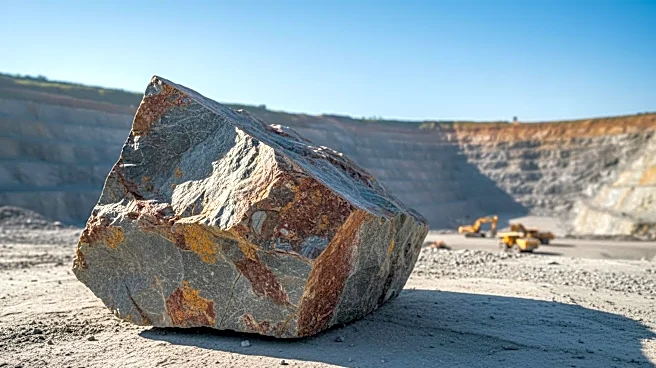
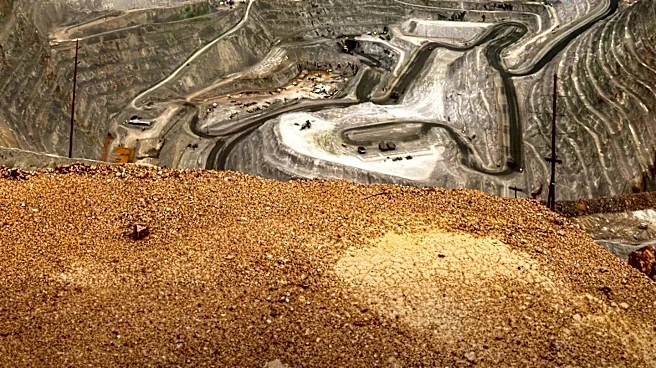
Saudi Arabia. The partnership will focus on discovering copper and other critical minerals essential for the energy transition, including zinc, lead, and rare earth elements. The JV is structured with Maaden holding a 51% ownership stake and Aramco holding 49%. Their primary exploration area will be Zone-4, also known as the Transition Zone, within the Arabian Platform, covering approximately 182,000 square kilometers, which accounts for nearly 10% of Saudi Arabia's total land area. This zone runs parallel to the Arabian Shield and is roughly 100 kilometers wide. The collaboration intends to leverage Aramco’s extensive geological and geophysical data, accumulated over 90 years, to accelerate the discovery process of these key transition minerals. Maaden’s exploration expertise will be combined with Aramco’s knowledge of the Arabian Platform to enhance the efficiency and speed of mineral discoveries.
Why It's Important?
This joint venture is significant for the global energy transition and the U.S. economy, as it targets critical minerals like copper, zinc, lead, and rare earth elements. These minerals are indispensable for various industries, including renewable energy technologies, electric vehicles, and advanced electronics, which are crucial for the U.S.'s technological and industrial growth. The U.S. relies heavily on imports for many of these critical minerals, making diversified global supply chains vital for national security and economic stability. By increasing the global supply of these minerals, the JV could help stabilize prices and ensure a more reliable source for U.S. manufacturers and consumers. Furthermore, the development of new mineral resources aligns with broader international efforts to secure sustainable supplies of materials needed for a low-carbon future. The partnership also highlights Saudi Arabia's strategic move to diversify its economy beyond oil, as outlined in its Vision 2030, which could lead to new trade and investment opportunities for U.S. companies in the mining and related sectors.
What's Next?
The newly formed joint venture is expected to commence exploration activities in Zone-4 of the Arabian Platform. The immediate next steps will involve leveraging Aramco’s historical geological and geophysical data to identify promising sites for mineral deposits. Both companies will integrate their respective expertise to accelerate the discovery of copper and other energy transition minerals. The JV will likely focus on developing advanced exploration techniques, potentially incorporating high-performance computing and artificial intelligence, as suggested by Aramco Vice President of Transition Minerals Saleh M. Al Saleh, to optimize the search for minerals at a lower cost. Successful discoveries could lead to the development of new mining operations, which would require significant investment in infrastructure and technology. This could also pave the way for further partnerships and collaborations with international mining and technology firms, including those from the U.S., seeking to secure access to these critical resources. The long-term goal is to establish Saudi Arabia as a significant player in the global supply chain for energy transition minerals.
Beyond the Headlines
Beyond the immediate economic and supply chain implications, this joint venture carries deeper strategic significance. It underscores a global shift towards securing critical minerals as geopolitical assets, akin to how oil has been viewed historically. For the U.S., this development highlights the ongoing challenge of reducing reliance on single-source suppliers for essential materials and the need to foster diverse and resilient supply chains. The ethical and environmental dimensions of mining will also come into sharper focus as new projects are developed. The responsible extraction and processing of these minerals will be crucial to avoid environmental degradation and ensure fair labor practices, issues that are increasingly scrutinized by international bodies and consumers. Furthermore, the use of advanced technologies like AI in mineral exploration could set new industry standards, potentially leading to more efficient and less environmentally impactful mining practices globally. This initiative could also spur innovation in mineral processing and recycling, contributing to a more circular economy for critical materials.