







What's Happening?
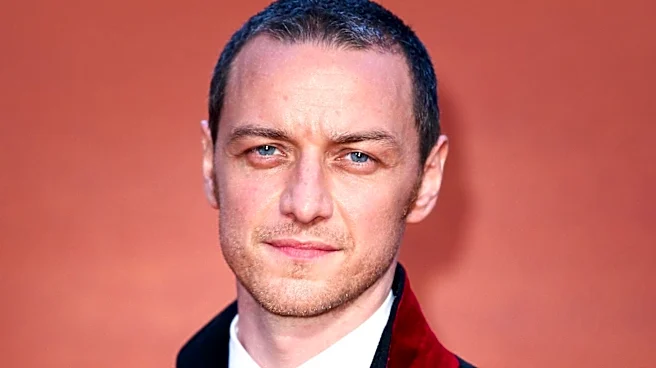
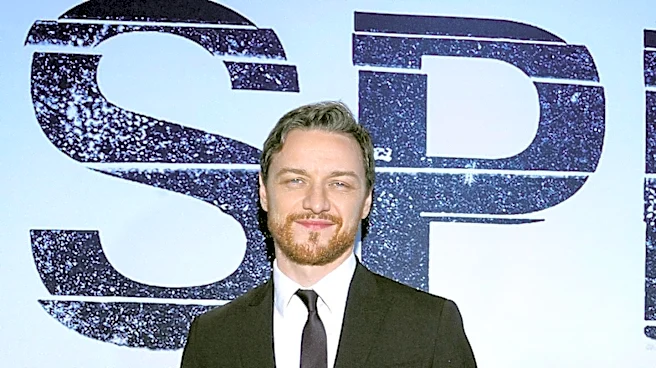
Actor James McAvoy has disclosed that his 2017 film 'Split' is the only movie from which he consistently receives significant residuals. During an appearance on the 'Happy Sad Confused' podcast, McAvoy explained that he 'very rarely' gets substantial
payments from his other films, often receiving checks for only a few hundred pounds or even as little as 25 cents. He clarified that despite host Josh Horowitz's belief, he does not receive considerable residuals from his 2008 film 'Wanted.' McAvoy attributed the consistent earnings from 'Split' to its exceptional financial performance: the film was made for approximately $6 million, had an advertising budget of around $30 million, and grossed $40 million on its opening weekend, generating profit immediately. He described this situation as 'bonkers' and credited the film's 'super smart' director, M. Night Shyamalan, for its success. McAvoy played a character with 24 personalities in 'Split,' a role that generated awards season buzz at the time.
Why It's Important?
McAvoy's revelation sheds light on the often-opaque world of Hollywood residuals, particularly for actors who are not at the very top tier of earnings. It highlights the significant disparity in how different films generate long-term income for talent, even for successful and critically acclaimed actors. The 'bonkers' financial success of 'Split' underscores the importance of a film's budget-to-box-office ratio in determining residual payments, suggesting that highly profitable, lower-budget films can be more lucrative for actors in the long run than high-grossing blockbusters with massive production costs. This insight is crucial for understanding the economic realities faced by many working actors, even those with established careers. It also implicitly comments on the current state of the film industry's compensation structures, which have been a point of contention in recent labor disputes, such as those involving writers and actors seeking fairer residual payments from streaming services.
What's Next?
McAvoy's candid comments could fuel ongoing discussions within the entertainment industry regarding fair compensation and residual structures, especially as streaming platforms continue to alter traditional revenue models. His experience might encourage other actors to speak out about their own residual earnings, potentially leading to greater transparency and advocacy for changes in how talent is paid for their work. For 'Split,' its continued generation of residuals indicates its enduring popularity and profitability, suggesting it will remain a significant asset for its distributors. This situation might also influence how actors negotiate future contracts, placing a greater emphasis on residual clauses, particularly for films with lower budgets but high commercial potential. The conversation around residuals is likely to remain a key topic in future labor negotiations and industry reforms.
Beyond the Headlines
Beyond the financial aspects, McAvoy's comments touch upon the broader cultural and artistic value placed on different genres within Hollywood. He noted that despite the awards buzz for his performance in 'Split,' a horror-thriller, he wasn't surprised by the lack of major industry nominations, suggesting a persistent bias against genre films in prestigious awards. This highlights a deeper issue within the film industry where certain types of performances and films are often overlooked by awards bodies, regardless of their critical or commercial success. McAvoy's observation that 'some horror performances or scary movie performances are kind of breaking through now, but even then it’s not that many' points to a slow but evolving recognition of genre acting. This conversation extends to the subjective nature of awards and the 'club' mentality that can exclude deserving work, prompting a re-evaluation of what constitutes 'award-worthy' cinema.