







What's Happening?
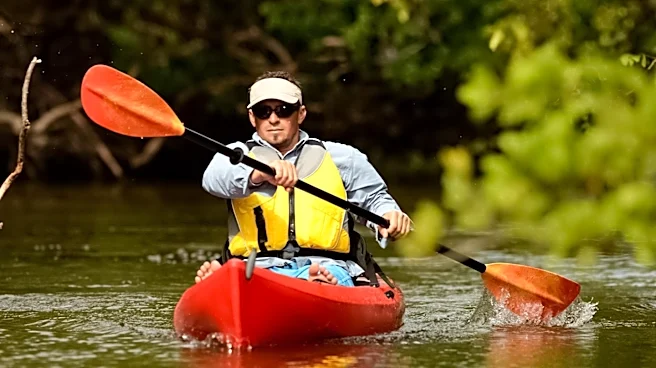
The Northeast Disabled Athletic Association (NDAA), a Vermont-based volunteer nonprofit, is expanding its adaptive kayaking programs, offering individuals with disabilities the opportunity to experience Adirondack waters. Cathy Webster, who directs the NDAA's
kayaking program and is a physical therapist, has been leading these trips for 11 summers, including a recent four-day excursion in the Adirondacks. The program focuses on empowering independence by adapting equipment to the individual's needs, rather than expecting the person to adapt to the equipment. Webster customizes kayaks with features like high-back seats, pontoon-style outriggers, and hull-mounted angled paddles to ensure safety and independence for participants. This approach allows individuals who use wheelchairs or have conditions like cerebral palsy to navigate waterways independently, accessing remote natural areas that might otherwise be inaccessible. The NDAA's efforts highlight a broader shift in outdoor accessibility, moving beyond just infrastructure upgrades to include personalized equipment adaptations.
Why It's Important?
This initiative is important because it significantly enhances accessibility and inclusivity in outdoor recreational activities for individuals with disabilities across the U.S. By providing adaptive kayaking opportunities, the NDAA addresses a critical gap in outdoor sports, allowing participants to achieve a sense of independence and connection with nature that is often limited by physical barriers. The program's focus on individualized equipment adaptation sets a precedent for other organizations and communities to reconsider how they approach accessibility, moving towards more personalized solutions. This not only improves the quality of life for participants but also challenges societal perceptions of disability, promoting a more inclusive view of athletic and recreational capabilities. The success of these programs can inspire broader adoption of adaptive sports, fostering physical and mental well-being for a demographic often underserved in outdoor activities.
What's Next?
The continued success and expansion of programs like the NDAA's adaptive kayaking could lead to increased awareness and funding for similar initiatives nationwide. Other outdoor recreational organizations and state parks may look to the NDAA's model for best practices in developing their own adaptive sports programs. There is potential for greater collaboration between physical therapists, engineers, and adaptive sports organizations to innovate new equipment and techniques, further broadening the range of accessible activities. Additionally, the visibility of these programs could influence public policy, encouraging more comprehensive accessibility standards that go beyond basic infrastructure to include specialized equipment and trained personnel. This could result in more widespread availability of adaptive outdoor sports, allowing more individuals with disabilities to participate in activities like kayaking, skiing, and ice skating.
Beyond the Headlines
Beyond the immediate benefits of recreation, adaptive kayaking fosters profound psychological and social impacts. For participants, it offers a unique opportunity for self-reliance and a temporary escape from the daily challenges associated with their disabilities. Chelsea Scheefer, who is paralyzed from the waist down, noted that kayaking allows her to 'blend in' and feel like 'everybody else,' highlighting the emotional and social liberation it provides. Kristina Parker, who has cerebral palsy, emphasized how adaptive equipment transforms an activity from feeling like 'the Olympics' to something enjoyable, underscoring the importance of tailored solutions in making sports accessible. This shift in perspective, from focusing on limitations to enabling capabilities, has broader implications for how society views and supports individuals with disabilities, promoting dignity, inclusion, and a richer quality of life.